


Page 42 - AIH-2-2
P. 42
Artificial Intelligence in Health                                         New drug discovery in the AI era


                                                               3.4. Deep learning (DL)

                                                                 DL, a subbranch of ML, learns from algorithms and
                                                               their  outcome  data  to  further  improve  using  neural
                                                               networks.  This disruptive technology has been effectively
                                                                       44
                                                               applied in various complex scenarios. For instance, NCEs
                                                               may have weak interaction strengths but be highly target-
                                                               selective, meaning they exhibit strong target selectivity but
                                                               relatively low absolute potency. In these cases, the goal is
                                                               to balance NCE potency and selectivity, finding the most
                                                               selective molecule with the minimum desirable potency.
                                                               Tools such as Affinity2Vec, DeepDTA, and DeepGS can
                                                               predict drug–target binding affinity, assign binding affinity
                                                               scores, and rank compounds. 45-47

                                                                 One approach to improving a ligand’s druggability
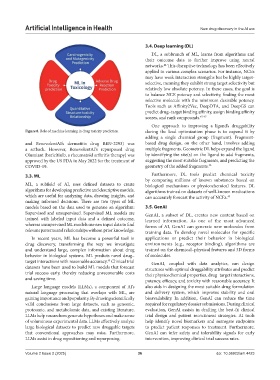
            Figure 8. Role of machine learning in drug toxicity prediction  during the lead optimization phase is to expand it by
                                                               adding a single chemical group (fragment). Fragment-
            and BenevolentAI’s dermatitis drug BEN-2293) was   based drug design, on the other hand, involves adding
            a  setback.  However,  BenevolentAI’s  repurposed  drug   multiple fragments. Geometric DL helps expand the ligand
            Olumiant (baricitinib, a rheumatoid arthritis therapy) was   by identifying the site(s) on the ligand to add fragments,
            approved by the US FDA in May 2022 for the treatment of   suggesting the most suitable fragments, and predicting the
            COVID-19.                                          geometry of the added fragments. 48

            3.3. ML                                              Furthermore, DL tools predict chemical toxicity
                                                               by comparing millions of known substances based on
            ML, a subfield of AI, uses defined datasets to create   biological mechanisms or physicochemical features. DL
            algorithms for developing predictive and descriptive models,   algorithms trained on datasets of well-known medications
            which are useful for analyzing data, drawing insights, and   can accurately forecast the activity of NCEs. 49
            making  informed decisions.  There are  two  types  of ML
            models based on the data used to generate an algorithm:   3.5. GenAI
            Supervised and unsupervised. Supervised ML models are   GenAI, a subset of DL, creates new content based on
            trained  with  labeled input  data  and  a defined  outcome,   learned information. As one of the most advanced
            whereas unsupervised ML models use raw input data to find   forms of AI, GenAI can generate new molecules from
            relevant patterns and relationships without prior knowledge.  training data. To develop novel molecules for specific
              In recent years, ML has become a powerful tool in   applications or predict their behavior in biological
            drug  discovery, transforming the  way we  investigate   environments (e.g., receptor binding), algorithms are
            and understand large, complex information about drug   trained on the chemical–physical features and 3D forms
            behavior in biological systems. ML predicts novel drug–  of molecules.
            target interactions with reasonable accuracy.  Clinical trial   GenAI, coupled with data analytics, can design
                                               43
            datasets have been used to build ML models that forecast   structures with optimal druggability attributes and predict
            trial success early, thereby reducing unrecoverable costs   their physicochemical properties, drug–target interactions,
            and saving time.                                   potency, efficacy, and toxicity with reasonable accuracy. It
              Large language models (LLMs), a component of AI’s   also aids in designing the most suitable drug formulation
            natural language processing that overlaps with ML, are   and delivery system, which improves stability and oral
            gaining importance and popularity. By drawing scientifically   bioavailability. In addition, GenAI can reduce the time
            valid conclusions from large datasets, such as genomic,   required for regulatory dossier submissions. During clinical
            proteomic, and metabolomic data, and existing literature,   evaluation, GenAI assists in drafting the best-fit clinical
            LLMs help researchers generate hypotheses and make sense   trial design and patient recruitment strategies. AI tools
            of voluminous experimental data. LLMs effectively analyze   help identify novel biomarkers and surrogate endpoints
            large biological datasets to predict new druggable targets   to predict patient responses to treatment. Furthermore,
            that conventional approaches may miss. Furthermore,   GenAI can infer safety and tolerability signals for early
            LLMs assist in drug repositioning and repurposing.  intervention, improving clinical trial success rates.


            Volume 2 Issue 2 (2025)                         36                               doi: 10.36922/aih.4423

