


Page 39 - AIH-2-2
P. 39
Artificial Intelligence in Health                                         New drug discovery in the AI era


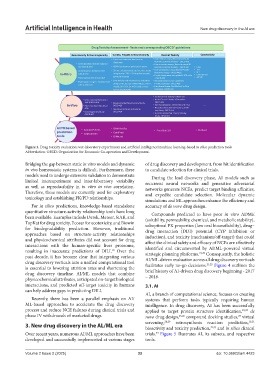
            Figure 3. Drug toxicity evaluation: wet-laboratory experiments and artificial intelligence/machine learning-based in silico prediction tools
            Abbreviation: OECD: Organization for Economic Co-operation and Development.

            Bridging the gap between static in vitro models and dynamic   of drug discovery and development, from hit identification
            in vivo homeostatic systems is difficult. Furthermore, these   to candidate selection for clinical trials.
            models need to undergo extensive validation to demonstrate   During the lead discovery phase, AI models such as
            limited interexperiment and inter-laboratory variability   recurrent neural networks and generative adversarial
            as well as reproducibility in  in  vitro  in  vivo correlation.   networks generate NCEs, predict target binding affinities,
            Therefore, these models are currently used for exploratory   and expedite candidate selection. Molecular dynamic
            toxicology and establishing PK/PD relationships.   simulations and ML approaches enhance the efficiency and
              For in silico predictions, knowledge-based standalone   accuracy of de novo drug design.
            quantitative structure-activity relationship tools have long   Compounds predicted to have poor  in vitro ADME
            been available. Examples include Derek, Meteor, StAR, and   (solubility, permeability, chemical, and metabolic stability),
            TopKat for drug toxicity, Ecosar for ecotoxicity, and Biowin   suboptimal PK properties (low oral bioavailability), drug–
            for biodegradability prediction. However, traditional   drug interaction (DDI) potential (CYP inhibition or
            approaches based on structure-activity relationships   induction), and toxicity (mechanism/off-target) that could
            and physicochemical attributes did not account for drug   affect the clinical safety and efficacy of NCEs are effectively
            interactions with the human-specific liver proteome,   identified  and  circumvented  by  AI/ML-powered  virtual
            resulting in inaccurate predictions of DILI.  Over the   strategic planning platforms. 19,20  Consequently, the holistic
                                                 18
            past decade, it has become clear that integrating various   AI/ML-driven evaluation across all drug discovery verticals
            drug discovery verticals into a unified computational tool   facilitates early no-go decisions. 21,22  Figure 4 outlines the
            is essential to lowering attrition rates and shortening the   brief history of AI-driven drug discovery beginning - 2017
            drug discovery timeline. AI/ML models that combine   – 2018.
            physicochemical attributes, anticipated on-target biological
            interactions, and  predicted off-target toxicity in  humans   3.1. AI
            can help address gaps in predicting DILI.
                                                               AI, a branch of computational science, focuses on creating
              Recently, there has been a parallel emphasis on AI/  systems  that perform  tasks  typically requiring human
            ML-based approaches to accelerate the drug discovery   intelligence. In drug discovery, AI has been successfully
            process and reduce NCE failures during clinical trials and   applied to target protein structure identification, 23,24   de
            phase IV withdrawals of marketed drugs.            novo drug design, 25,26  compound docking studies,  virtual
                                                                                                      27
            3. New drug discovery in the AL/ML era             screening, 28,29  retrosynthesis reaction prediction, 30,31
                                                               bioactivity and toxicity prediction,
                                                                                              and in silico clinical
                                                                                           32,33
            Over recent years, numerous AI/ML approaches have been   trials.  Figure 5 illustrates AI, its subsets, and respective
                                                                   34
            developed and successfully implemented at various stages   tools.
            Volume 2 Issue 2 (2025)                         33                               doi: 10.36922/aih.4423

