


Page 70 - AIH-2-2
P. 70
Artificial Intelligence in Health                         Improved liver tumor segmentation with dense networks


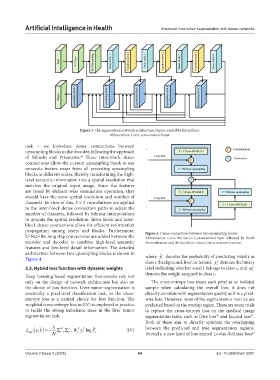
                                   Figure 3. The segmentation network architecture. Figure created by the authors.
                                                Abbreviation: Conv: convolutional layer.

            task – we introduce dense connections between
            upsampling blocks in the decoder, following the approach
                                   34
            of Bilinski and Prisacariu.  These inter-block dense
            connections allow the current upsampling block to use
            semantic feature maps from all preceding upsampling
            blocks at different scales, thereby transforming the high-
            level semantic information into a spatial resolution that
            matches the original input image. Since the features
            are fused by element-wise summation operation, they
            should have the same spatial resolution and number of
            channels. In view of this, 3 × 3 convolutions are applied
            to the inter-block dense connection paths to adjust the
            number of channels, followed by bilinear interpolations
            to upscale the spatial resolution. Intra-block and inter-
            block dense connections allow for efficient information
            propagation among layers and blocks. Furthermore,   Figure 4. Dense connections between two upsampling blocks
            U-Net-like long skip connections are added between the   Abbreviation: Conv-BN-ReLU: Convolutional layer followed by Batch
            encoder and decoder to combine high-level semantic   Normalization and the Rectified Linear Unit activation function.
            features  and low-level  detail information.  The detailed
            architecture between two upsampling blocks is shown in   where  ˘ y  denotes the probability of predicting voxel i as
                                                                      c
            Figure 4.                                                 i
                                                                                             c
                                                               class c (background, liver, or lesion),  y  denotes the binary
                                                                                             i
                                                                                                            c
            2.3. Hybrid loss function with dynamic weights     label indicating whether voxel i belongs to class c, and ω
                                                                                                            i
                                                               denotes the weight assigned to class c.
            Deep learning-based segmentation frameworks rely not
            only  on  the  design  of  network  architecture  but  also  on   The cross-entropy loss treats each pixel as an isolated
            the choice of loss function. Liver tumor segmentation is   sample when calculating the overall loss; it does not
            essentially  a  pixel-level  classification  task,  so  the  cross-  directly correlate with segmentation quality as it is a pixel-
            entropy loss is a natural choice for loss function. The   wise loss. However, most of the segmentation metrics are
            weighted cross-entropy loss as (IV) is employed in practice   evaluated based on the overlap region. There are some trials
            to tackle the strong  imbalance  issue in the  liver tumor   to replace the cross-entropy loss on the medical image
            segmentation task.                                 segmentation tasks, such as Dice loss  and Jaccard loss .
                                                                                             35
                                                                                                            21
                                                               Both of them aim to directly optimize the overlapping
                        1

            L  y y, ˘  N   i1  3 c1 Wy log y  c ^ i  (IV)  between the predicted and true segmentation regions.
                                    C
                           N
                                  C
                                  i
             wce
                                    i
                                                                                                            27
                                                               Recently, a new kind of loss named Lovász-Softmax loss
            Volume 2 Issue 2 (2025)                         64                               doi: 10.36922/aih.5001

