


Page 11 - AIH-2-3
P. 11
Artificial Intelligence in Health                                           AI in embryo selection for ART


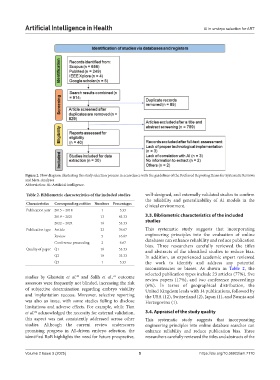
            Figure 2. Flow diagram illustrating the study selection process in accordance with the guidelines of the Preferred Reporting Items for Systematic Reviews
            and Meta-Analyses
            Abbreviation: AI: Artificial intelligence.

            Table 2. Bibliometric characteristics of the included studies  well-designed, and externally validated studies to confirm
                                                               the reliability and generalizability of AI models in the
            Characteristics  Corresponding entities  Numbers  Percentages  clinical environment.
            Publication year  2015 – 2018   1       3.33
                        2019 – 2021         13      43.33      3.3. Bibliometric characteristics of the included
                        2022 – 2024         16      53.33      studies
            Publication type Article        23      76.67      This  systematic  study  suggests  that  incorporating
                        Review              5       16.67      engineering principles into the evaluation of online
                        Conference proceeding  2    6.67       databases can enhance reliability and reduce publication
            Quality of paper Q1             16      53.33      bias. Three researchers carefully reviewed the titles
                                                               and abstracts of the identified studies to reduce bias.
                        Q2                  10      33.33      In addition, an experienced academic expert reviewed
                        Q3                  1       3.33       the work to identify and address any potential
                                                               inconsistencies or biases. As shown in  Table  2, the
                                                               selected publication types include 23 articles (77%), five
            studies by Glatstein  et al.  and Salih  et al.,  outcome   review papers (17%), and two conference proceedings
                                                 21
                                  20
            assessors were frequently not blinded, increasing the risk   (6%). In terms of geographical distribution, the
            of subjective determination regarding embryo viability   United Kingdom leads with 14 publications, followed by
            and implantation success. Moreover, selective reporting   the USA (12), Switzerland (2), Japan (1), and Bosnia and
            was  also  an  issue,  with  some  studies  failing  to  disclose   Herzegovina (1).
            limitations  and  adverse  effects.  For  example,  while  Tian
            et al.  acknowledged the necessity for external validation,   3.4. Appraisal of the study quality
                22
            this aspect was not consistently addressed across other   This  systematic  study  suggests  that  incorporating
            studies. Although the current review underscores   engineering principles into online database searches can
            promising progress in AI-driven embryo selection, the   enhance  reliability and  reduce  publication bias.  Three
            identified RoB highlights the need for future prospective,   researchers carefully reviewed the titles and abstracts of the


            Volume 2 Issue 3 (2025)                         5                         https://doi.org/10.36922/aih.7170

