


Page 12 - AIH-2-3
P. 12
Artificial Intelligence in Health                                           AI in embryo selection for ART


            identical studies to reduce bias. In addition, an experienced   3.6. Implications of the area under the curve (AUC)
            professional reviewed the work to identify and address any   in embryo selection
            potential inconsistencies or biases.               In embryo selection algorithms, the term “area under
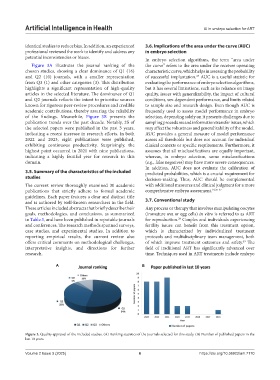
              Figure  3A illustrates the journal ranking of the   the curve” refers to the area under the receiver operating
            chosen studies, showing a clear dominance of Q1 (16)   characteristic curve, which helps in assessing the probability
            and Q2  (10) journals, with a smaller representation   of successful implantation.  AUC is a useful statistic for
                                                                                     24
            from Q3 (1) and other categories (3). This distribution   evaluating the performance of embryo selection algorithms,
            highlights a significant representation of high-quality   but it has several limitations, such as its reliance on image
            articles in the selected literature. The dominance of Q1   quality, issues with generalizability, the impact of cultural
            and Q2 journals reflects the intent to prioritize sources   conditions, sex-dependent performance, and limits related
            known for rigorous peer-review procedures and credible   to sample size and research design. Even though AUC is
            academic contributions, thereby assuring the reliability   frequently used to assess model performance in embryo
            of the findings. Meanwhile,  Figure  3B presents the   selection, depending solely on it presents challenges due to
            publication trends over the past decade. Notably, 25 of   sampling procedures and information transfer issues, which
            the selected papers were published in the past 3 years,   may affect the robustness and generalizability of the model.
            indicating a recent increase in research efforts. In both   AUC provides a general measure of model performance
            2022 and 2023, eight publications were published,   across all thresholds but does not account for individual
            exhibiting continuous productivity.  Surprisingly,  the   clinical contexts or specific requirements. Furthermore, it
            highest point occurred in 2021 with nine publications,   assumes that all misclassifications are equally important,
            indicating a highly fruitful year for research in this   whereas, in embryo selection, some misclassifications
            domain.                                            (e.g., false negatives) may have more severe consequences.
                                                               In addition, AUC does not evaluate the calibration of
            3.5. Summary of the characteristics of the included   predicted probabilities, which is a crucial requirement for
            studies                                            decision-making. Thus, AUC should be complemented
            The current review thoroughly examined 30 academic   with additional measures and clinical judgment for a more
            publications that strictly adhere to formal academic   comprehensive embryo assessment. 24,35-37
            guidelines. Each paper features a clear and distinct title
            and is authored by well-known researchers in the field.   3.7. Conventional study
            These articles included abstracts that briefly describe their   Any process or therapy that involves manipulating oocytes
            goals, methodologies, and conclusions, as summarized   (immature ova or egg cells) in vitro is referred to as ART
            in Table 3, and have been published in reputable journals   for reproduction.  Couples and individuals experiencing
                                                                             38
            and conferences. The research methods spanned surveys,   fertility issues can benefit from this treatment option,
            case studies, and experimental studies. In addition to   which is characterized by individualized treatment
            reporting empirical results, the current review also   protocols and multidisciplinary team management, both
            offers critical comments on methodological challenges,   of which improve treatment outcomes and safety.  The
                                                                                                        39
            interpretative insights, and directions for further   field of traditional ART has significantly advanced over
            research.                                          time. Techniques used in ART treatments include embryo

                         A                                   B


            Figure 3. Quality appraisal of the included studies. (A) Ranking statistics of the journals selected for this study. (B) Number of published papers in the
            last 10 years.


            Volume 2 Issue 3 (2025)                         6                         https://doi.org/10.36922/aih.7170

