


Page 125 - AIH-2-3
P. 125
Artificial Intelligence in Health                              Opportunities for AI-based arrhythmia screening


                                                               more, the condition is diagnosed as sinus arrhythmia.
                                                               This condition is common across all age groups but is
                                                               particularly prevalent in teenagers and pre-teens, where it
                                                               is sometimes not considered a pathological condition. One
                                                               potential cause of sinus arrhythmia is the influence of the
                                                               vagus nerve, which regulates both respiration and heart
                                                               rhythm. Through the effects of the vagus nerve on the
                                                               sinus node, the heart rate is increased during inspiration
                                                               and decreased during expiration.

                                                                 Accurate detection of fetal cardiac signals during
                                                               pregnancy is critical  for identifying potential  congenital
                                                               heart conditions. Fetal ECG recordings are obtained using
                                                               leads placed in a special arrangement on the abdomen of
                                                               the mother.  While the maternal ECG is dominant, the
                                                                        9
                                                               fetal ECG, which is superimposed on the maternal ECG,
                                                               can be isolated using frequency-domain filtering. The
                                                               fetal heart rate is generally higher than the maternal heart
                                                               rate, enabling effective separation of the two signals using
                                                               filters designed and configured in the frequency domain.
                                                               Advanced frequency and wavelet analysis techniques are
                                                               essential for extracting meaningful diagnostic information
                                                               from these recordings.
                                                                 ECG signals are stochastic and rarely perfectly
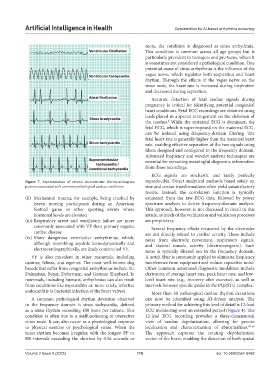
            Figure  7.  Representation  of  several  characteristic  electrocardiogram   reproducible. Direct analytical methods  based  solely on
            patterns associated with common pathological cardiac conditions  sine and cosine transformations often yield unsatisfactory
                                                               results. Instead, the correlation function is typically
            (ii)  Mechanical trauma, for  example, being  crushed by   estimated from the raw ECG data, followed by power
               heavy, moving participants during an American   spectrum  analysis  to  derive  frequency-domain  analysis.
               football game or other sporting events where    This approach, however, is not discussed in detail in this
               hormonal levels are elevated                    article, as much of the verification and validation processes
            (iii) Respiratory arrest and ventilatory failure are more   are proprietary.
               commonly associated with VF than primary organic   Several frequency effects measured by the electrodes
               cardiac disease                                 are not directly related to cardiac activity. These include
            (iv)  Many dangerous ventricular arrhythmias, which,   noise from electrode movement, respiratory signals,
               although resembling asystole hemodynamically and   and skeletal muscle activity (electromyogram). Such
               electrocardiographically, are finely constructed VF.  noise is typically filtered out in the frequency domain.
              VF  is  also  prevalent  in  other  mammals,  including   A notch filter is commonly applied to eliminate frequency
            canines, felines, and equines. The most well-known dog   interference from equipment and reduce capacitive noise.
            breeds that suffer from congenital arrhythmias include the   Other common automated diagnostic modalities include
            Dalmatian, Boxer, Doberman, and German Shepherd. In   derivation of average heart rate, peak heart rate, and low-
            mammals, including humans, arrhythmias can also result   level heart rate (e.g., recovery after exercise), as well as
            from conditions like myocarditis or, more rarely, infective   intervals between specific peaks in the PQRSTU complex.
            endocarditis (a bacterial infection of the heart valves).  More than 30 pathological cardiac rhythm deviations

              A common pathological rhythm deviation observed   can now be identified using AI-driven analysis. The
            in the frequency domain is sinus tachycardia, defined   primary method for achieving this level of detail is 12-lead
            as a sinus rhythm exceeding 100 beats per minute. This   ECG monitoring over an extended period (Figure 4). The
            condition is often due to a malfunctioning or overactive   12-lead ECG recording provides a three-dimensional
            sinus node. It can also occur as a physiological response   view of cardiac depolarization, allowing for precise
            to physical exercise or psychological stress. When the   localization and characterization of abnormalities. 50-66
            sinus rhythm becomes irregular, with the longest PP or   The approach captures the rotating depolarization
            RR intervals exceeding the shortest by 0.16  seconds or   vector of the heart, enabling the detection of both spatial


            Volume 2 Issue 3 (2025)                        119                               doi: 10.36922/aih.8468

