


Page 23 - AIH-2-3
P. 23
Artificial Intelligence in Health                                           AI in embryo selection for ART


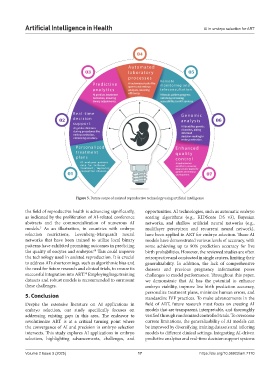
                                 Figure 5. Future scope of assisted reproductive technology using artificial intelligence

            the field of reproductive health is advancing significantly,   opportunities. AI technologies, such as automatic embryo
            as indicated by the proliferation of AI-related conference   scoring algorithms (e.g., KIDScore D5 v3), Bayesian
            abstracts and the commercialization of numerous AI   networks, and shallow artificial neural networks (e.g.,
            models.  As an illustration, in countries with embryo   multilayer perceptron and recurrent neural network),
                  3
            selection  restrictions,  Levenberg–Marquardt  neural   have been applied in ART for embryo selection. These AI
            networks  that  have been  trained  to utilize  local  binary   models have demonstrated various levels of accuracy, with
            patterns have exhibited promising outcomes in predicting   some achieving up to 90% prediction accuracy for live
                                         68
            the quality of oocytes and embryos.  This could improve   birth probabilities. However, the reviewed studies are often
            the technology used in assisted reproduction. It is crucial   retrospective and conducted in single centers, limiting their
            to address AI’s shortcomings, such as algorithmic bias and   generalizability. In addition, the lack of comprehensive
            the need for future research and clinical trials, to ensure its   datasets and previous pregnancy information poses
            successful integration into ART.  Employing large training   challenges to model performance. Throughout this paper,
                                     90
            datasets and robust models is recommended to surmount   we demonstrate that AI has the potential to enhance
            these challenges.                                  embryo viability, improve live birth prediction accuracy,
                                                               personalize treatment plans, minimize human errors, and
            5. Conclusion                                      standardize IVF practices. To make advancements in the
            Despite the extensive literature on AI applications in   field of ART, future research must focus on creating AI
            embryo selection, our study specifically focuses on   models that are transparent, interpretable, and thoroughly
            addressing existing gaps in this area. The endeavor to   verified through randomized controlled trials. To overcome
            revolutionize ART is at a critical turning point where   current limitations, the generalizability of AI models can
            the convergence of AI and precision in embryo selection   be improved by diversifying training datasets and tailoring
            intersects. This study explores AI applications in embryo   models to different clinical settings. Integrating AI-driven
            selection, highlighting advancements, challenges, and   predictive analytics and real-time decision support systems


            Volume 2 Issue 3 (2025)                         17                        https://doi.org/10.36922/aih.7170

