


Page 115 - AIH-2-4
P. 115
Artificial Intelligence in Health                                  Autonomic nervous system patterns in men


                                                               activity, with implications for both physical and mental
                                                               well-being.  Reduced HRV is generally associated with a
                                                                        49
                                                               higher risk of CVD and physiological stress, 3,50,51  whereas
                                                               elevated HRV is typically indicative of good health. 38,52-54  The
                                                               advent of wearable technology has made HRV monitoring
                                                               more practical, enabling early detection of cardiovascular
                                                               dysfunction and supporting proactive health management
                                                               strategies.  However, to date, no studies have examined the
                                                                       55
                                                               use of combined PCA and K-means clustering techniques
                                                               to identify individual risk profiles based on HRV data.
                                                                 Pasquini  et al.  applied PCA to identify five PCs in
                                                                             54
                                                               ANS time series data that collectively explained 75% of
                                                               the  variance  during emotional  reactivity  tasks.  K-means
                                                               clustering revealed five distinct ANS states corresponding
                                                               to specific emotions, such as awe and sadness.
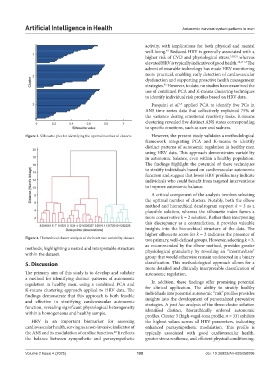
            Figure 3. Silhouette plot for identifying the optimal number of clusters  However, the present study validates a methodological
                                                               framework integrating  PCA and  K-means  to identify
                                                               distinct patterns of autonomic regulation in healthy men
                                                               using HRV data. This approach demonstrates variability
                                                               in autonomic balance, even within a healthy population.
                                                               The findings highlight the potential of these techniques
                                                               to stratify individuals based on cardiovascular autonomic
                                                               function and suggest that lower HRV profiles may indicate
                                                               individuals who could benefit from targeted interventions
                                                               to improve autonomic balance.
                                                                 A critical component of the analysis involves selecting
                                                               the optimal number of clusters. Notably, both the elbow
                                                               method and hierarchical dendrogram support k = 3 as a
                                                               plausible solution, whereas the silhouette index favors a
                                                               more conservative k = 2 solution. Rather than interpreting
                                                               this  discrepancy  as  a  contradiction,  it  provides  valuable
                                                               insights into the hierarchical structure of the data. The
                                                               higher silhouette score for k = 2 indicates the presence of
            Figure 4. Hierarchical cluster analysis of the heart rate variability dataset  two primary, well-defined groups. However, selecting k = 3,
                                                               as recommended by the elbow method, provides greater
            methods, highlighting a nested and interpretable structure   physiological granularity by revealing an “intermediate”
            within the dataset.
                                                               group that would otherwise remain undetected in a binary
            5. Discussion                                      classification. This methodological approach allows for a
                                                               more detailed and clinically interpretable classification of
            The primary aim of this study is to develop and validate   autonomic regulation.
            a method for identifying distinct patterns of autonomic
            regulation in healthy men, using a combined PCA and   In addition, these findings offer promising potential
            K-means clustering approach applied to HRV data. The   for clinical application. The ability to stratify healthy
                                                               individuals into potential autonomic “risk” profiles provides
            findings demonstrate that this approach is both feasible
            and  effective  in  stratifying  cardiovascular  autonomic   insights  into the  development of  personalized preventive
            function, revealing significant physiological heterogeneity   strategies. A post hoc analysis of the three-cluster solution
            within a homogeneous and healthy sample.           identified distinct, hierarchically ordered autonomic
                                                               profiles. Cluster 3 (high-vagal-tone profile; n = 33) exhibits
              HRV is an important biomarker for assessing      the highest values across all HRV parameters, indicating
            cardiovascular health, serving as a non-invasive indicator of   enhanced parasympathetic modulation. This profile is
                                                  48
            the ANS and its modulation of cardiac function.  It reflects   typically associated with good cardiovascular health,
            the balance between sympathetic and parasympathetic   greater stress resilience, and efficient physical conditioning.

            Volume 2 Issue 4 (2025)                        109                          doi: 10.36922/AIH025050006

