


Page 104 - AJWEP-22-5
P. 104
Liu and Jusoh


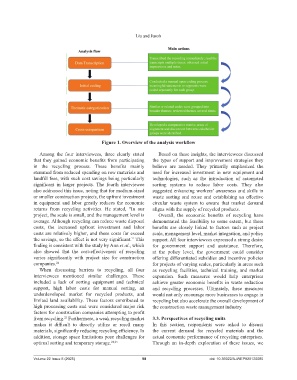
                                              Figure 1. Overview of the analysis workflow

                  Among the  four interviewees,  three  clearly  stated   Based on these insights, the interviewees discussed
                that they gained economic benefits from participating   the types of support and improvement strategies they
                in  the  recycling  process.  These  benefits  mainly   believe  are needed.  They primarily  emphasized  the
                stemmed from reduced spending on raw materials and   need  for  increased  investment  in  new  equipment  and
                landfill fees, with such cost savings being particularly   technologies,  such  as  the  introduction  of  automated
                significant  in  larger  projects.  The  fourth  interviewee   sorting systems to reduce labor costs.  They also
                also addressed this issue, noting that for medium-sized   suggested enhancing workers’ awareness and skills in
                or smaller construction projects, the upfront investment   waste  sorting  and  reuse  and  establishing  an  effective
                in equipment and labor greatly reduces the economic   circular  waste system to ensure that  market  demand
                returns  from recycling  activities.  He stated,  “In  our   aligns with the supply of recycled products.
                project, the scale is small, and the management level is   Overall,  the  economic  benefits  of  recycling  have
                average. Although recycling can reduce waste disposal   demonstrated the feasibility to some extent, but these
                costs, the increased upfront investment  and labor   benefits  are  closely  linked  to  factors  such  as  project
                costs are relatively higher, and these costs far exceed   scale, management level, market integration, and policy
                the savings, so the effect is not very significant.” This   support. All four interviewees expressed a strong desire
                finding is consistent with the study by Ann et al., which   for government  support and  assistance.  Therefore,
                also  showed  that  the  cost-effectiveness  of  recycling   at the policy level,  the government  could consider
                varies  significantly  with  project  size  for  construction   offering differentiated subsidies and incentive policies
                companies. 24                                       for projects of varying scales, particularly in areas such
                  When discussing barriers to recycling,  all four   as recycling  facilities,  technical  training,  and market
                interviewees  mentioned  similar  challenges.  These   expansion.  Such  measures  would  help  enterprises
                included  a  lack  of  sorting  equipment  and  technical   achieve  greater  economic  benefits  in  waste  reduction
                support, high labor costs for manual sorting, an    and  recycling  processes.  Ultimately,  these  measures
                underdeveloped  market  for recycled  products, and   would not only encourage more businesses to engage in
                limited  land availability.  These factors contributed to   recycling but also accelerate the overall development of
                high processing costs and were considered major risk   the construction waste management industry.
                factors for construction companies attempting to profit
                from recycling.  Furthermore, a weak recycling market   3.3. Perspectives of recycling units
                             23
                makes  it  difficult  to  directly  utilize  or  resell  many   In this section, respondents were asked to discuss
                materials, significantly reducing recycling efficiency. In   the current demand for recycled materials  and the
                addition, storage space limitations pose challenges for   actual economic performance of recycling enterprises.
                optimal sorting and temporary storage. 24,25        Through  an  in-depth  exploration  of these  issues, we


                Volume 22 Issue 5 (2025)                        98                           doi: 10.36922/AJWEP025120080

