


Page 23 - AJWEP-22-5
P. 23
Heterogeneous catalysts for biodiesel production


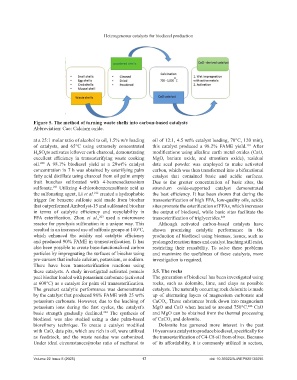
                Figure 5. The method of turning waste shells into carbon-based catalysts
                Abbreviation: Cao: Calcium oxide.


                at a 25:1 molar ratio of alcohol to oil, 1.5% w/v loading   oil of 12:1, 4.5 wt% catalyst loading, 70°C, 120 min),
                of catalysts,  and 65°C using extremely  concentrated   this  catalyst  produced  a  98.2%  FAME yield.  After
                                                                                                              101
                H SO to activates leftover cork charcoal, demonstrating   modifications using alkaline earth metal oxides (CaO,
                     4
                 2
                excellent  efficiency  in  transesterifying  waste  cooking   MgO, barium  oxide, and strontium  oxide), residual
                oil.   A 98.1% biodiesel  yield  at  a  20wt% catalyst   date  seed  powder  was employed  to  make  activated
                   220
                concentration in 7 h was obtained by esterifying palm   carbon, which was then transformed into a bifunctional
                fatty acid distillate using charcoal from oil palm empty   catalyst  that  contained  basic  and acidic  surfaces.
                fruit  bunches sulfonated  with 4-benzenediazonium   Due to the  greater  concentration  of basic sites, the
                sulfonate.  Utilizing 4-chlorobenzenesulfonic acid as   strontium  oxide-supported  catalyst  demonstrated
                        221
                the sulfonating agent, Li et al.  created a hydrophobic   the best efficiency. It has been shown that during the
                                          222
                trigger for benzene sulfonic acid made from biochar   transesterification of high FFA, low-quality oils, acidic
                that outperformed Amberlyst-15 and sulfonated biochar   sites promote the esterification of FFAs, which increases
                in  terms  of  catalytic  efficiency  and  recyclability  in   the output of biodiesel, while basic sites facilitate the
                FFA  esterification.  Zhou  et al.,  used a microwave   transesterification of triglycerides. 225
                                             223
                reactor for pyrolysis sulfonation in a unique way. This   Although activated  carbon-based catalysts  have
                resulted in an increased use of sulfonic groups at 140°C,   shown promising catalytic performance  in the
                which  enhanced  the  acidity  and  catalytic  efficiency   production of biodiesel using biomass, issues, such as
                and produced 90% FAME in transesterification. It has   prolonged reaction times and catalyst leaching still exist,
                also been possible to create base-functionalized carbon   restricting  their reusability.  To solve  these  problems
                particles by impregnating the surfaces of biochar using   and maximize the usefulness of these catalysts, more
                pre-cursors that include calcium, potassium, or sodium.   investigation is required.
                There  have  been  transesterification  reactions  using
                these catalysts. A study investigated activated pomelo   3.5. The rocks
                peel biochar loaded with potassium carbonate (activated   The generation of biodiesel has been investigated using
                at 600°C) as a catalyst for palm oil transesterification.   rocks, such as dolomite,  lime,  and clays  as possible
                The greatest  catalytic  performance  was demonstrated   catalysts. The naturally occurring rock dolomite is made
                by the catalyst that produced 98% FAME with 25 wt%   up of alternating  layers of magnesium carbonate and
                potassium carbonate. However, due to the leaching of   CaCO . These substances break down into magnesium
                                                                          3
                potassium  ions  during  the  first  cycles,  the  catalyst’s   MgO and CaO when heated to around 750°C.  CaO
                                                                                                              226
                basic strength gradually declined.   The synthesis of   and MgO can be obtained from the thermal processing
                                               224
                biodiesel  was also studied using a date palm-based   of CaCO  and dolomite.
                                                                            3
                biorefinery  technique.  To  create  a  catalyst  modified   Dolomite  has garnered  more interest  in the past
                with CaO, date pits, which are rich in oil, were utilized   10 years as a catalyst to produce biodiesel, specifically for
                as feedstock, and the waste residue was carbonized.   the transesterification of C4-C8 oil from olives. Because
                Under ideal circumstances(molar ratio of methanol to   of its affordability, it is commonly utilized in sectors,


                Volume 22 Issue 5 (2025)                        17                           doi: 10.36922/AJWEP025130095

