


Page 105 - AJWEP-22-6
P. 105
Adsorption desulfurization


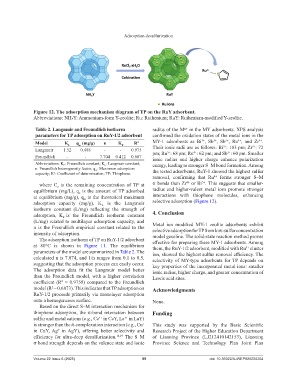
                Figure 12. The adsorption mechanism diagram of TP on the RuY adsorbent.
                Abbreviations: NH₄Y: Ammonium-form Y-zeolite; Ru: Ruthenium; RuY: Ruthenium-modified Y-zeolite.

                 Table 2. Langmuir and Freundlich isotherm          radius of the Mⁿ⁺ in the MY adsorbents. XPS analysis
                 parameters for TP adsorption on RuY-1/2 adsorbent  confirmed the oxidation states of the metal ions in the
                                                                                               3+
                                                                                          3+
                                                                                                          4+
                                                                                                    5+
                                                                                                                   4+
                 Model        K    q  (mg/g)   n     K      R 2     MY-1  adsorbents  as  Bi ,  Sb ,  Sb ,  Ru ,  and  Zr .
                               L    m                  F            Their ionic radii are as follows: Bi ⁺: 103 pm; Zr ⁺: 72
                                                                                                   3
                                                                                                                4
                 Langmuir    1.52   0.488      -      -    0.975                      4              5
                 Freundlich   -       -      7.704  0.412  0.687    pm; Ru³⁺: 68 pm; Ru ⁺: 62 pm; and Sb ⁺: 60 pm. Smaller
                                                                    ionic radius and higher charge enhance polarization
                 Abbreviations: K F : Freundlich constant; K L : Langmuir constant;   energy, leading to stronger S–M bond formation. Among
                 n: Freundlich heterogeneity factor; q m : Maximum adsorption
                 capacity; R²: Coefficient of determination; TP: Thiophene.  the tested adsorbents, RuY-1 showed the highest sulfur
                                                                    removal,  confirming  that  Ru ⁺  forms  stronger  S–M
                                                                                               4
                                                                                          3
                                                                                   4
                  where  C  is the remaining concentration of  TP at   σ bonds than Zr ⁺ or Bi ⁺. This suggests that smaller-
                          e
                equilibrium (mg/L), q  is the amount of TP adsorbed   radius and higher-valent metal ions promote stronger
                                    e
                at equilibrium (mg/g), q  is the theoretical maximum   interactions  with  thiophene  molecules,  enhancing
                                      m
                adsorption capacity (mg/g), K  is the Langmuir      selective adsorption (Figure 12).
                                              L
                isotherm  constant  (L/mg)  reflecting  the  strength  of
                adsorption, K is  the  Freundlich  isotherm  constant   4. Conclusion
                             F
                (L/mg) related to multilayer adsorption capacity, and
                n  is  the  Freundlich  empirical  constant  related  to  the   Metal  ion  modified  MY-1  zeolite  adsorbents  exhibit
                intensity of adsorption.                            selective adsorption for TP from low-sulfur concentration
                                                                    model gasoline. The solid-state reaction method proves
                  The adsorption isotherm of TP on RuY-1/2 adsorbent   effective for preparing these MY-1 adsorbents. Among
                at  80°C  is  shown  in  Figure  11.  The  equilibrium   them, the RuY-1/2 adsorbent, modified with Ru ⁺ cluster
                                                                                                             4
                parameters of the model are summarized in Table 2. The   ion, showed the highest sulfur removal efficiency. The
                calculated n is 7.074, and 1/n ranges from 0.1 to 0.5,   selectivity  of MY-type  adsorbents for TP depends on
                suggesting that the adsorption process can easily occur.   key properties of the incorporated metal ions: smaller
                The  adsorption  data  fit  the  Langmuir  model  better   ionic radius, higher charge, and greater concentration of
                than  the  Freundlich  model,  with  a  higher  correlation   Lewis acid sites.
                coefficient (R  = 0.9758) compared to the Freundlich
                            2
                model (R = 0.6873). This indicates that TP adsorption on   Acknowledgments
                        2
                RuY-1/2 proceeds primarily via monolayer adsorption
                onto a homogeneous surface.                         None.
                  Based on the direct S–M interaction mechanism for
                thiophene adsorption, the σ-bond interaction between   Funding
                sulfur and metal cations (e.g., Ce⁴⁺ in CeY, La³⁺ in LaY)
                is stronger than the π-complexation interaction (e.g., Cu⁺   This  study  was  supported  by  the  Basic  Scientific
                in  CuY, Ag⁺  in AgY),  offering  better  selectivity  and   Research Project of the Higher Education Department
                efficiency  for  ultra-deep  desulfurization. 14,29  The  S–M   of Liaoning  Province  (LJ212410142153), Liaoning
                σ bond strength depends on the valence state and ionic   Province  Science  and  Technology  Plan  Joint  Plan


                Volume 22 Issue 6 (2025)                        99                           doi: 10.36922/AJWEP025250204

