


Page 189 - AJWEP-22-6
P. 189
Municipal street lighting retrofit in Bulgaria

                              A            B           C             D        E             F


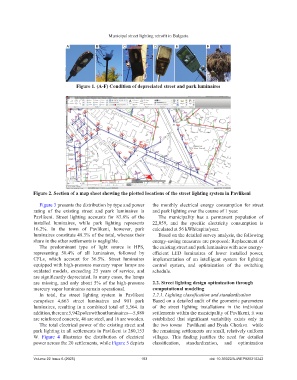
                                   Figure 1. (A-F) Condition of depreciated street and park luminaires


                Figure 2. Section of a map sheet showing the plotted locations of the street lighting system in Pavlikeni

                  Figure 3 presents the distribution by type and power   the  monthly  electrical  energy consumption  for street
                rating  of the existing  street and park luminaires  in   and park lighting over the course of 1 year.
                Pavlikeni. Street lighting accounts for 83.8% of the   The municipality  has a permanent population of
                installed  luminaires,  while  park  lighting  represents   22,059,  and  the  specific  electricity  consumption  is
                16.2%. In the town of Pavlikeni, however, park      calculated at 56 kWh/capita/year.
                luminaires constitute 48.3% of the total, whereas their   Based on the detailed survey analysis, the following
                share in the other settlements is negligible.       energy-saving measures are proposed: Replacement of
                  The  predominant  type  of light  source  is  HPS,   the existing street and park luminaires with new energy-
                representing 50.4% of all luminaires,  followed by   efficient  LED  luminaires  of  lower  installed  power,
                CFLs, which  account  for 36.5%. Street  luminaires   implementation  of an intelligent  system for lighting
                equipped with high-pressure mercury vapor lamps are   control  system, and optimization  of the  switching
                outdated models, exceeding  25  years of service, and   schedule.
                are significantly depreciated. In many cases, the lamps
                are missing, and only about 5% of the high-pressure   2.2. Street lighting design optimization through
                mercury vapor luminaires remain operational.        computational modeling
                  In total, the street  lighting system in Pavlikeni   2.2.1. Lighting classification and standardization
                comprises 4,663 street luminaires  and 901 park     Based on a detailed audit of the geometric parameters
                luminaires, resulting in a combined total of 5,564. In   of  the  street  lighting  installations  in  the  individual
                addition, there are 5,942 poles without luminaires—5,880   settlements within the municipality of Pavlikeni, it was
                are reinforced concrete, 46 are steel, and 16 are wooden.  established  that  significant  variability  exists  only  in
                  The total electrical power of the existing street and   the two towns—Pavlikeni and Byala Cherkva—while
                park lighting in all settlements in Pavlikeni is 280,153   the remaining settlements are small, relatively uniform
                W.  Figure  4 illustrates  the distribution of electrical   villages.  This  finding  justifies  the  need  for  detailed
                power across the 20 settlements, while Figure 5 depicts   classification,   standardization,   and   optimization


                Volume 22 Issue 6 (2025)                       183                           doi: 10.36922/AJWEP025310242

