


Page 20 - AJWEP-22-6
P. 20
Syromiatnykov


                                      References  2,58,62,65,77  50,70,71  65,66  28,72  31,37,45,51,65  64,69  67,73


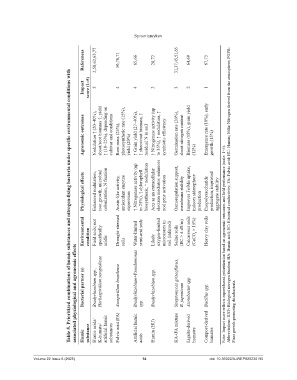
                                Table 5. Prioritized combinations of humic substances and nitrogen-fixing bacteria under specific environmental conditions with

                                      Impact   score (1–5)  5  4  4  3         3     2      1


                                      Agronomic outcomes  Nodulation ↑ (20–40%),  shoot/root biomass ↑, yield   ↑ (10–25%), depending on   cultivar and conditions  Root mass (25%),   photosynthetic rate (15%),   yield (20%)  ↑ Grain yield (27–40%),   ↑ shoot/root biomass, ↑   residual N in soil  ↑ Nitrogenase activity (up   to 35%), ↑ nodulation, ↑   symbiotic efficiency  Germination rate (20%),   shoot nitrogen content  Biomass (18%), grain yield   (12%)  Emergence rate (10%), early   growth (15%)


                                      Physiological effects  Enhanced nodulation,   root growth, microbial   colonization, N fixation  Auxin-like activity,   antioxidant enzyme   expression  ↑ Nitrogenase activity (up   to 25%), ↑ chlorophyll   biosynthesis, ↑ nodulation  Acts as an extracellular  electron mediator; enhances   nod gene activation  Osmoregulation support,   membrane stability  Improves Fe/Mn uptake,   induces siderophore   production  Exopolysaccharide   production, improved   aggregate stability Ab


                                      Environmental   condition  Field soils; not   specifically   acidic  Drought-stressed   soils  Water-limited   semi-arid soils  Likely   oxygen-limited   microzones in   soil (inferred)  Saline soils    (EC > 4 dS/m)  Calcareous soils   (CaCO 3  > 15%)  Heavy clay soils Note: Impact score reflects expert-based prioritization based on agronomic outcomes and field performance (scale: 1–5).


                                  associated physiological and agronomic effects


                                      Bacterial partner (s)  Bradyrhizobium spp.,  Herbaspirillum seropedicae  Azospirillum brasilense  Bradyrhizobium+Pseudomonas   spp.  Bradyrhizobium spp.  Streptomyces griseoflavus,   B. japonicum  Azotobacter spp.  Bacillus spp.  Plant growth-promoting rhizobacteria.


                                      Humic   substance  Humic acids/  K-humate/  artificial humic   substances  Fulvic acid (FA)  Artificial humic   acids  Humin (HU)  HA+FA mixture  Lignite-derived   humates  Compost-derived   humates


                Volume 22 Issue 6 (2025)                        14                           doi: 10.36922/AJWEP025230190

