


Page 108 - AN-3-3
P. 108
Advanced Neurology                                                 Proteomic analysis of microglia exosomes


            “antigen processing and presentation,” and the “MAPK   sphingosine-1-phosphate phosphatase 1 (SPP1) attracted
            signaling pathway” (Figure 5E). On comparing M2-EXOs   our attention (Figure 6B). When comparing the M2-EXO
            and M1-EXOs, differential protein enrichment was evident   group to the M1-EXO group, the PPI network of the DEPs
            in “complement and coagulation cascades,” “toll-like   consisted of 39 nodes and 113 edges, and in addition to
            receptor signaling,” “PI3K-Akt signaling,” and “neutrophil   the previously mentioned proteins, complement factor B
            extracellular trap formation” (Figure 5F).         (CFB) and serglycin (SRGN) proteins were also identified
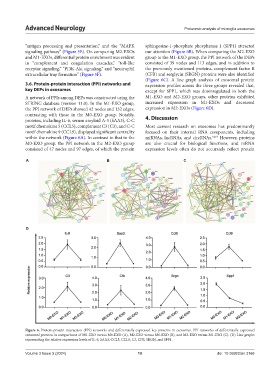
                                                               (Figure  6C). A  line  graph analysis of exosomal protein
            3.6. Protein-protein interaction (PPI) networks and   expression profiles across the three groups revealed that,
            key DEPs in exosomes                               except for SPP1, which was downregulated in both the
            A network of PPIs among DEPs was constructed using the   M1-EXO and M2-EXO groups, other proteins exhibited
            STRING database (version 11.0). In the M1-EXO group,   increased expression in M1-EXOs and decreased
            the PPI network of DEPs showed 42 nodes and 132 edges,   expression in M2-EXOs (Figure 6D).
            contrasting with those in the M0-EXO group. Notably,
            proteins, including IL-6, serum amyloid A-3 (SAA3), C-C   4. Discussion
            motif chemokine 5 (CCL5), complement C3 (C3), and C-C   Most current research on exosomes has predominantly
            motif chemokine 9 (CCL9), displayed significant centrality   focused on their internal RNA components, including
            within the network (Figure 6A). In contrast to that in the   miRNAs, lncRNAs, and circRNAs. 18,19  However, proteins
            M0-EXO group, the PPI network in the M2-EXO group   are also crucial for biological functions, and mRNA
            consisted of 47 nodes and 97 edges, of which the protein   expression levels often do not accurately reflect protein

            A                                 B                                C


            D


            Figure 6. Protein-protein interaction (PPI) networks and differentially expressed key proteins in exosomes. PPI networks of differentially expressed
            exosomal proteins in comparisons of M1-EXO versus M0-EXO (A), M2-EXO versus M0-EXO (B), and M2-EXO versus M1-EXO (C). (D) Line graphs
            representing the relative expression levels of IL-6, SAA3, CCL5, CCL9, C3, CFB, SRGN, and SPP1.

            Volume 3 Issue 3 (2024)                         10                               doi: 10.36922/an.3166

