


Page 107 - AN-3-3
P. 107
Advanced Neurology                                                 Proteomic analysis of microglia exosomes


                         A                                   B


                         C                                   D


                         E                                    F


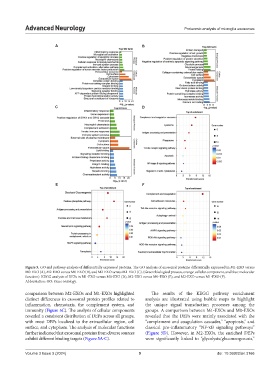
            Figure 5. GO and pathway analysis of differentially expressed proteins. The GO analysis of exosomal proteins differentially expressed in M1-EXO versus
            M0-EXO (A), M2-EXO versus M0-EXO (B), and M2-EXO versus M1-EXO (C). (Green: biological process, orange: cellular component, and blue: molecular
            function). KEGG analysis of DEPs in M1-EXO versus M0-EXO (D), M2-EXO versus M0-EXO (E), and M2-EXO versus M1-EXO (F).
            Abbreviation: GO: Gene ontology.

            comparison between M2-EXOs and M1-EXOs highlighted   The results of the KEGG pathway enrichment
            distinct  differences  in  exosomal  protein  profiles  related  to   analysis are illustrated using bubble maps to highlight
            inflammation, chemotaxis, the complement system, and   the unique signal transduction processes among the
            immunity (Figure 5C). The analysis of cellular components   groups. A comparison between M1-EXOs and M0-EXOs
            revealed a consistent distribution of DEPs across all groups,   revealed that the DEPs were mainly associated with the
            with most DEPs localized to the extracellular region, cell   “complement and coagulation cascades,” “apoptosis,” and
            surface, and cytoplasm. The analysis of molecular functions   classical pro-inflammatory “NF-κB signaling pathways”
            further indicated that exosomal proteins from diverse sources   (Figure  5D). However, in M2-EXOs, the enriched DEPs
            exhibit different binding targets (Figure 5A-C).   were significantly linked to “glycolysis/gluconeogenesis,”


            Volume 3 Issue 3 (2024)                         9                                doi: 10.36922/an.3166

