


Page 104 - AN-3-3
P. 104
Advanced Neurology                                                 Proteomic analysis of microglia exosomes


                         A                       B                        C


                         D


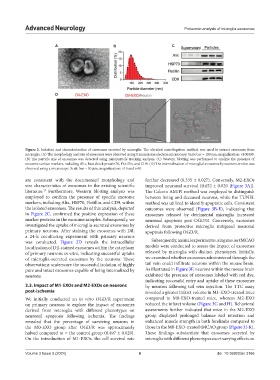
            Figure 2. Isolation and characterization of exosomes secreted by microglia. The ultrafast centrifugation method was used to extract exosomes from
            microglia. (A) The morphology and size of exosomes were observed using transmission electron microscopy. Scale bar = 100 nm; magnification: ×100000.
            (B) The particle size of exosomes was detected using nanoparticle tracking analysis. (C) Western blotting was performed to analyze the presence of
            exosome surface markers, including Alix, heat shock protein70, Flotillin, and CD9. (D) The internalization of microglial exosomes by neurons in vitro was
            observed using a microscope. Scale bar = 50 μm; magnification: ×10 and ×40.

            are consistent with the documented morphology and   further decreased (0.335 ± 0.027). Conversely, M2-EXOs
            size characteristics of exosomes in the existing scientific   improved neuronal survival (0.652 ± 0.020 [Figure 3A]).
            literature.  Furthermore, Western blotting analysis was   The Calcein AM/PI method was employed to distinguish
                    17
            employed to confirm the presence of specific exosome   between living and deceased neurons, while the TUNEL
            markers, including Alix, HSP70, Flotillin, and CD9, within   method was utilized to identify apoptotic cells. Consistent
            the isolated exosomes. The results of this analysis, depicted   outcomes were observed (Figure  3B-E), indicating that
            in Figure 2C, confirmed the positive expression of these   exosomes released by detrimental microglia increased
            marker proteins in the exosome samples. Subsequently, we   neuronal apoptosis post-OGD/R. Conversely, exosomes
            investigated the uptake of microglia-secreted exosomes by   derived from protective microglia mitigated neuronal
            primary neurons. After staining the exosomes with Dil,   apoptosis following OGD/R.
            a 24-h coculturing experiment with primary neurons
            was conducted.  Figure  2D reveals the intracellular   Subsequently, animal experiments using mouse tMCAO
            localization of Dil-stained exosomes within the cytoplasm   models were conducted to assess the impact of exosomes
            of primary neurons in vitro, indicating successful uptake   released by microglia with distinct phenotypes. Initially,
            of microglia-secreted exosomes by the neurons. These   we examined whether exosomes administered through the
            observations underscore the successful isolation of highly   tail vein could infiltrate neurons within the mouse brain.
            pure and intact exosomes capable of being internalized by   As illustrated in Figure 3F, neurons within the mouse brain
            neurons.                                           exhibited the presence of exosomes labeled with red dye,
                                                               indicating successful entry and uptake of these exosomes
            3.3. Impact of M1-EXOs and M2-EXOs on neurons      by neurons following tail vein injection. The TTC assay
            post-ischemia                                      revealed a greater infarct volume in M1-EXO-treated mice

            We initially conducted an  in vitro OGD/R experiment   compared  to  M0-EXO-treated  mice,  whereas  M2-EXO
            on primary neurons to explore the impact of exosomes   reduced the infarct volume (Figure 3G and H). Behavioral
            derived from microglia with different phenotypes on   assessments further indicated that mice in the M2-EXO
            neuronal apoptosis following ischemia. The findings   group displayed prolonged balance rod retention and
            revealed that the percentage of surviving neurons in   enhanced muscle strength in both forelimbs compared to
            the M0-EXO group after OGD/R was approximately     those in the M0-EXO-treated tMCAO group (Figure 3I-K).
            halved compared to = the control group (0.497 ± 0.029).   These findings substantiate that exosomes secreted by
            On the introduction of M1-EXOs, the cell survival rate   microglia with different phenotypes exert varying effects on


            Volume 3 Issue 3 (2024)                         6                                doi: 10.36922/an.3166

