


Page 30 - ARNM-1-1
P. 30
Advances in Radiotherapy
            & Nuclear Medicine                                        Mathematic modeling of PDD for FF and FFF in photon


            A                                                  by the parameters n and μ generated in the buildup-tail
                                                               function.
                                                                 The comparison between modeled and measured S
                                                                                                             c
                                                               of Varian in FFF beams for photon energies of 6 and 10
                                                               MV is shown in Table 3. Table 3 shows the measured S
                                                                                                             c
                                                               in FFF beams at a range of 0.889 to 1.126 for Varian 6
                                                               MV photon energy and 0.926 to 1.064 for 10 MV photon
                                                               energy at square field sizes from 4 × 4 cm  to 40 × 40 cm .
                                                                                                2
                                                                                                            2
                                                               The deviation of Sc modeled by Equation III and measured
                                                               S  was maximum at 1.12% for 6 MV and within 1.0% for
                                                                c
                                                               10 MV.
            B                                                    Since parameter n represents the photon beam
                                                               hardening factor in the buildup function, in other words,
                                                               the larger n (n = 4.95), the higher beam quality. Therefore,
                                                               it was observed that the larger n, the less surface dose, and
                                                               the deeper d max  (to compare n = 4.95 and n = 0.0495 in
                                                               Figure 5).
                                                                 On the other hand,  μ represents the attenuation
                                                               coefficient. Meanwhile, the tail function represents the
                                                               beam penetration ability of a high-energy photon beam.
                                                               As shown in Figure 5, the larger μ (μ = 0.458) is correlated
                                                               with more attenuation when the photon penetrates in
                                                               the medium; therefore, it was observed that the larger μ
                                                               is correlated to the steeper curves and a shorter range (to
                                                               compare μ = 0.458 and μ = 0.00458).
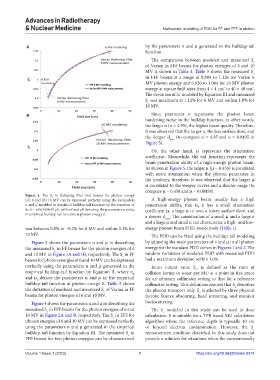
            Figure  4. The S  in flattening filter free beams for photon energy
                       c
            (A) 6 and (B) 10 MV can be expressed perfectly using the parameters   A high-energy photon beam usually has a high
            n and μ modeled in empirical buildup-tail function by the equation of   penetration ability, that is, it has a small attenuation
            Sc,E = nE•(FS)4.45 μE, with nE and μE denoting the parameters n and μ   coefficient μ, a large n to own a lower surface dose, and
            in empirical buildup-tail function at photon energy E.  a deeper d  . The combination of a small μ and a large n
                                                                       max
                                                               and a large μ and small n can characterize a high- and low-
            was between 0.8% to −0.2% for 6 MV and within 0.1% for   energy photon beam PDD, respectively (Table 1).
            10 MV.                                               The PDD can be fitted using the buildup-tail modeling

              Figure 3 shows the parameters n and μ in describing   by adjusting the main parameters of n and μ in all photon
            the measured S  in FF beams for the photon energies of 6   energy for the standard PDD curves in Figures 1 and 2. The
                        c
            and 10 MV in Figure 1A and 1B, respectively. The S  in FF   random variations of modeled PDD with measured PDD
                                                     c
            beams for photon energies of 6 and 10 MV can be expressed   had a maximum deviation within 1.0%.
            perfectly using the parameters n and μ generated in the   In-air output ratio, S , is defined as the ratio of
                                                                                    c
            empirical buildup-tail function by Equation II, where n    collision kerma to water per MU at a point in free space
                                                          E
            and  μ denote the parameters n and  μ in the empirical   for an arbitrary collimator setting to that for a reference
                 E
            buildup-tail function at photon energy E. Table 2 shows   collimator setting. This definition ensures that S  describes
                                                                                                     c
            the deviation of modeled and measured S  of Varian in FF   the photon transport only. S  is affected by three physical
                                             c
                                                                                      c
            beams for photon energies of 6 and 10 MV.          factors: Source obscuring, head scattering, and monitor
              Figure 4 shows the parameters n and μ in describing the   backscattering.
            measured S  in FFF beams for the photon energies of 6 and   The S  modeled in this study can be used in dose
                     c
                                                                      c
            10 MV in Figure 2A and B, respectively. The S  in FFF for   calculation. It is suitable for a TPR-based MU calculation
                                                 c
            photon energies of 6 and 10 MV can be expressed perfectly   algorithm where the reference depth is typically 10  cm
            using the parameters n and μ generated in the empirical   or  beyond  electron  contamination.  However,  the  S
                                                                                                             c
            buildup-tail function by Equation III. The measured S  in   measurement condition described in this study does not
                                                        c
            FFF beams for two photon energies can be characterized   provide a solution for situations when the conventionally
            Volume 1 Issue 1 (2023)                         7                       https://doi.org/10.36922/arnm.0314

