


Page 31 - ARNM-1-1
P. 31
Advances in Radiotherapy
            & Nuclear Medicine                                        Mathematic modeling of PDD for FF and FFF in photon


                                                               reduce the time of measurements and the confidence
                                                               to  use  interpolation.  Knowing  the  smallest  number  of
                                                               measurements needed to characterize the S  in either FF or
                                                                                                 c
                                                               FFF high-energy X-ray beams would be helpful.
                                                               Acknowledgments

                                                               The author appreciates Professor Zhang-Yan Shan for his
                                                               great contribution to this study and is juxtaposed with first
                                                               author (co-first authors with equal contribution).
                                                               Funding

                                                               This work was supported by Science and Technology
                                                               Department, Gansu  Province, China-funded projects:
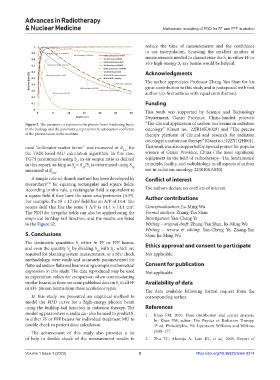
            Figure 5. The parameter n represents the photon beam hardening factor   “The clinical application of carbon ion beams in radiation
            in the buildup, and the parameter μ represents the attenuation coefficient   oncology” (Grant no.: 22JR10KA029) and “The precise
            of the photon beam in the medium.                  therapy  platform  of  clinical  and  research  for  radiation
                                                               oncology in carbon ion therapy” (Grant no.: 22ZY1QH001).
            used “collimator-scatter factor” was measured at d max  for   This work was also supported by Special project for popular
            the TMR-based MU calculation algorithm. In this case,   science  of  Gansu  Province,  China  (The  most  significant
            TG74 recommends using S , in-air output ratio as defined   equipment in the field of radiotherapy- The fundamental
                                  c
            in this report, so long as S = S /S  is determined using S    principle, facility, and radiobiology in all aspects of carbon
                                       c
                                                         cp
                                 p
                                    cp
            measured at d  .                                   ion in radiation oncology 22JR10KA030).
                       max
              A simple rule-of-thumb method has been developed by   Conflict of interest
            researchers  for equating rectangular and square fields.
                     [19]
            According to this rule, a rectangular field is equivalent to   The authors declare no conflicts of interest.
            a square field if they have the same area/perimeter (A/P).   Author contributions
            For example, the 18 × 12 cm  field has an A/P of 14.4. The
                                   2
            square field that has the same 4 A/P is 14.4 × 14.4 cm .   Conceptualization: Jia-Ming Wu
                                                         2
            The PDD for irregular fields can also be applied using the   Formal analysis: Zhang-Yan Shan
            empirical buildup-tail function, and the results are listed   Investigation: Yan-Cheng Ye
            in the Figure S2.                                  Writing – original draft: Zhang-Yan Shan, Jia-Ming Wu
                                                               Writing – review & editing: Yan-Cheng Ye, Zhang-Yan
            5. Conclusions                                     Shan, Jia-Ming Wu
            The dosimetric quantities S  either in FF or FFF beams,   Ethics approval and consent to participate
                                  c
            and even the quantity S  by dividing S  with S , which are
                                                 c
                                          cp
                               p
            required for planning system measurement, or a MU check   Not applicable.
            methodology, were easily and accurately parameterized for
            flattened and un-flattened beams using a simple mathematical   Consent for publication
            expression in this study. The data reproduced may be used   Not applicable.
            as expectation values for comparison when commissioning
            similar beams, as there are scant published data on S  in all FF   Availability of data
                                                   c
            or FFF photon beams from these accelerator types.
                                                               The data available following formal request from the
              In this study, we presented an empirical method to   corresponding author.
            model the PDD curve for a high-energy photon beam
            using the buildup-tail function in radiation therapy. The   References
            modeling parameters n and μ can also be used to predict S   c  1.   Khan FM, 2010, Dose distribution and scatter analysis.
            in either FF or FFF beams for individual treatment MU to   In: Khan FM, editor. The Physics of Radiation Therapy.
            double check in patient dose calculation.             4  ed. Philadelphia, PA: Lippincott Williams and Wilkins,
                                                                   th
              The  achievement of  this  study  also  provides  a  lot   p140–157.
            of help in double check of the measurement results to   2.   Zhu TC, Ahnesjo A, Lam KL,  et al., 2009, Report of


            Volume 1 Issue 1 (2023)                         8                       https://doi.org/10.36922/arnm.0314

