


Page 58 - ARNM-2-3
P. 58
Advances in Radiotherapy
            & Nuclear Medicine                                                             NCRT for T3N0M0 ESCC


            2.4. Follow-up                                     was determined from the surgery date until the first sign of

            During the treatment phase, patients were evaluated   disease progression or the last known follow-up date. Actual
            weekly. After completing treatment, they were monitored   survival was calculated using the Kaplan–Meier method and
            every 3 – 6 months for the 1  2 years, every 6 – 12 months   compared using the log-rank test. Prognostic factors were
                                  st
            for the next 3 years, and annually thereafter. Recurrence was   analyzed using univariate and multivariate Cox regression
            classified as local recurrence, distant metastasis, or death   analyses. To mitigate potential confounding factors between
            due to other causes. Local recurrence was characterized   the groups, propensity score matching (PSM) was also
                                                               performed to balance the uneven variables between the two
            as the reappearance of cancer in the supraclavicular,   patient cohorts. A 1:1 nearest neighbor matching algorithm
            mediastinal, or peritoneal regions, while distant metastasis   was applied using a caliper width of 0.02. The following
            referred to the recurrence of cancer in other parts of the   variables were selected to generate the propensity score: age,
            body. All recurrences were confirmed through CT or   sex, Karnofsky Performance Status (KPS), weight loss, tumor
            magnetic resonance imaging scans, endoscopy, or positron   location, tumor length, lymphovascular invasion (LVI),
            emission tomography-CT examinations. Cytological or   perineural invasion (PNI), and total LNs excised. A P < 0.05
            histological examinations were conducted when necessary,   was considered statistically significant. All analyses were
            and the location and date of recurrence were documented.
                                                               performed using R Statistical Software (Version 4.2.2,
            2.5. Statistical analysis                          http://www.R-project.org, The R Foundation).
            Baseline characteristics of the study participants were   3. Results
            compared using the Chi-squared test or Fisher’s exact test,
            as appropriate. Overall survival (OS) was calculated from   3.1. Patient characteristics
            the date of diagnosis to the occurrence of the event or the   After  applying  the  inclusion  and  exclusion  criteria,  the
            last known follow-up date. Disease-free survival (DFS)   records of 443 eligible patients treated between January

            A                                B                               C


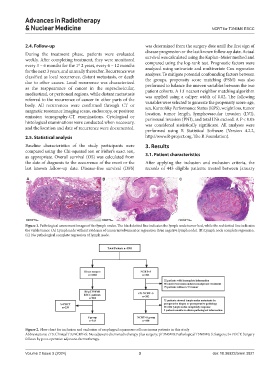
            Figure 1. Pathological assessment images of the lymph nodes. The black dotted line indicates the lymph node tumor bed, while the red dotted line indicates
            the viable tumor. (A) Lymph node without evidence of cancer involvement or regression (true negative lymph node). (B) Lymph node complete regression.
            (C) No pathological complete regression of lymph node.


            Figure 2. Flow chart for inclusion and exclusion of esophageal squamous cell carcinoma patients in this study
            Abbreviations: cT3: Clinical T3; NCRT+S: Neoadjuvant chemoradiotherapy plus surgery; pT3N0M0: Pathological T3N0M0; S: Surgery; S+POCT: Surgery
            follows by post-operative adjuvant chemotherapy.


            Volume 2 Issue 3 (2024)                         3                              doi: 10.36922/arnm.3821

