


Page 73 - ARNM-2-3
P. 73
Advances in Radiotherapy
            & Nuclear Medicine                                       Association between PET-derived flows and angiography


            A                                                  LCX MFR (Figure 4C). Individuals with global MFR <1.7
                                                               had overall poorer survival (P log-rank  = 0.002) compared to
                                                               those without impaired global MFR (Figure 4D). Note that
                                                               59/189  (31%) patients had impairment in all four MFR
                                                               parameters (LAD, RCA, LCX, and global) (Figure S4).

                                                               3.5. Unadjusted all-cause mortality associated with
                                                               perfusion defects in ≥10% of territory

                                                               To ascertain the role of epicardial versus microvascular
                                                               disease, we examined the survival of patients with and
            B                                                  without  baseline  perfusion defects spanning ≥10%  and
                                                               <10% of LV segments. There was no significant difference
                                                               (P log-rank  = 0.56) in all-cause mortality of patients whose
                                                               perfusion defects were ≥10% and <10% of the LV (Figure 5).
                                                               There was no significant difference in LAD territory MFR,
                                                               RCA territory MFR, LCX territory MFR, or global MFR
                                                               between patients whose perfusion defects were ≥10% and
                                                               <10% of the LV (Table S3).

                                                               3.6. Adjusted all-cause mortality associated with
                                                               impaired MFR
                                                               We adjusted for age at the time of PET MPI, sex, BMI,
            C                                                  presence of Type 2 diabetes, CAD, HF, smoking history, and
                                                               need for subsequent revascularization to further account
                                                               for the possibility of confounders in patient survival. 3%
                                                               (6/189)  of patients  underwent  subsequent CABG, and
                                                               6% (11/189) of patients underwent subsequent PCI. After
                                                               adjustment for covariates, all parameters (regional and
                                                               global MFR <1.7) were associated with higher mortality:
                                                               LAD territory MFR (adjusted hazard ratio [aHR] = 2.1,
                                                               95% confidence interval [CI] = 1.048 – 4.3, P Cox  = 0.037);
                                                               RCA territory MFR (aHR = 3.4, 95% CI = 1.6 – 7.1, P Cox  =
                                                               0.001); LCX territory (aHR = 2.8, 95% CI = 1.4 – 5.9, P Cox
                                                               = 0.006); global MFR <1.7 (aHR = 2.7, 95% CI = 1.3 – 5.7,
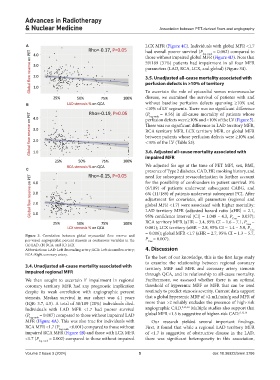
            Figure  3.  Correlation between global myocardial flow reserve and
            per-vessel angiographic percent stenosis as continuous variables in the   P Cox  = 0.007).
            (A) LAD, (B) RCA, and (C) LCX
            Abbreviations: LAD: Left descending artery; LCX: Left circumflex artery;   4. Discussion
            RCA: Right coronary artery.
                                                               To the best of our knowledge, this is the first large study
                                                               to examine the relationship between regional coronary
            3.4. Unadjusted all-cause mortality associated with   territory MBF and MFR and coronary artery stenosis
            impaired regional MFR                              through QCA, and its relationship to all-cause mortality.

            We then sought to ascertain if impairment in regional   Furthermore,  we  assessed  whether  there  is  an  optimal
            coronary territory MFR had any prognostic implication   threshold of  hyperemic  MBF or MFR  that can  be used
            despite its weak correlation with angiographic percent   routinely to predict stenosis severity. Current data support
            stenosis. Median survival in our cohort was 4.1  years   that a global hyperemic MBF of >2 mL/min/g and MFR of
            (IQR: 3.7, 4.5). A total of 38/189 (20%) individuals died.   more than >2 reliably excludes the presence of high-risk
            Individuals with LAD MFR <1.7 had poorer survival   angiographic CAD. 9,11,16  Multiple studies also support that
            (P log-rank  = 0.007) compared to those without impaired LAD   global MFR <1.5 is suggestive of higher-risk CAD. 8,12,13
            MFR (Figure 4A). This was also true for individuals with   Our  research  yielded  several  important  findings.
            RCA MFR <1.7 (P log-rank  <0.001) compared to those without   First, it found that while a regional LAD territory MFR
            impaired RCA MFR (Figure 4B) and those with LCX MFR   of  <1.7  is  suggestive  of  obstructive  disease  in  the  LAD,
            <1.7 (P log-rank  = 0.002) compared to those without impaired   there was significant heterogeneity in this association,


            Volume 2 Issue 3 (2024)                         5                              doi: 10.36922/arnm.3786

