


Page 74 - ARNM-2-3
P. 74
Advances in Radiotherapy
            & Nuclear Medicine                                       Association between PET-derived flows and angiography


                         A                                   C


                         B                                   D


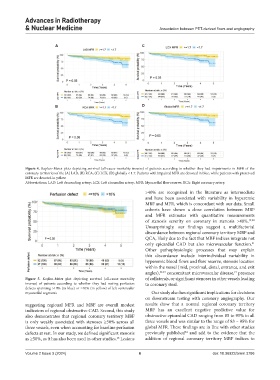
            Figure 4. Kaplan–Meier plots depicting survival (all-cause mortality inverse) of patients according to whether they had impairments in MFR of the
            coronary territories of the (A) LAD, (B) RCA, (C) LCX, (D) globally < 1.7. Patients with impaired MFR are denoted in blue, while patients with preserved
            MFR are denoted in yellow
            Abbreviations: LAD: Left descending artery; LCX: Left circumflex artery; MFR: Myocardial flow reserve; RCA: Right coronary artery.
                                                               >40% are recognized in the literature as intermediate
                                                               and have been associated with variability in hyperemic
                                                               MBF and MFR, which is concordant with our data. Small
                                                               cohorts have shown a close correlation between MBF
                                                               and MFR estimates with quantitative measurements
                                                               of stenosis severity on coronary in stenosis >40%. 19,20
                                                               Unsurprisingly,  our  findings  suggest  a  multifactorial
                                                               discordance between regional coronary territory MBF and
                                                               QCA, likely due to the fact that MBF indices integrate not
                                                               only epicardial CAD but also microvascular function.
                                                                                                            21
                                                               Other pathophysiologic processes that may explain
                                                               this discordance include interindividual variability in
                                                               hyperemic blood flows and flow reserve, stenosis location
                                                               within the vessel (mid, proximal, distal, entrance, and exit
                                                               angles), 22,23  concomitant microvascular disease,  presence
                                                                                                     21
            Figure  5. Kaplan-Meier plot depicting survival (all-cause mortality   of collaterals, or significant stenoses in other vessels leading
            inverse) of patients according to whether they had resting perfusion   to coronary steal.
            defects spanning >10% (in blue) or ≤10% (in yellow) of left ventricular
            myocardial segments                                  Our study also has significant implications for decisions
                                                               on downstream testing with coronary angiography. Our
            suggesting regional MFR and MBF are overall modest   results show that a normal regional coronary territory
            indicators of regional obstructive CAD. Second, this study   MBF has an excellent negative predictive value for
            also demonstrates that regional coronary territory MBF   obstructive epicardial CAD ranging from 85 to 95% in all
            is  only weakly associated  with  stenoses  ≥50% across all   three vessels and was similar to the range of 83 – 95% for
            three vessels, even when accounting for baseline perfusion   global MFR. These findings are in line with other studies
                                                                                24
            defects at rest. In our study, we defined significant stenosis   previously  published   and  add  to  the  evidence  that  the
            as ≥50%, as it has also been used in other studies.  Lesions   addition of regional coronary territory MBF indices  to
                                                   18
            Volume 2 Issue 3 (2024)                         6                              doi: 10.36922/arnm.3786

