


Page 39 - DP-1-1
P. 39
Design+                                                        Industrial design leads to understanding of users


            users. For a long time, Italian manufacturers have involved   created by the introduction of technologies. In 1993, Starck
            designers in their innovation processes; this successful   offered his significant image of the 21  century, stating that
                                                                                            st
            combination is the reason for the formation of companies   it will be the “immaterial century of energy and electronic
            that  still  today  have  international  fame,  such  as  Kartell   intelligence. The more the objects that surround us will lose
            (1949), Arflex (1950), Danese (1955) and Artemide (1959).   volume, the more they will gain in emotional density.” 3, p.62
            Despite this enormous success and the excellent level of   At the same time, the role of industrial designer became an
            quality in Italian production, since the 1970s, many   official job title.
            professionals have changed their ideas about the classical   Since the 21  century, industrial designers have become
                                                                           st
            concept of design.
                                                               pivotal figures that dramatically influenced the functionality,
              Along with the meaning-giving to the noun design is   esthetics, ergonomics, and innovation of our daily-use
            the introduction of new words such as anti/post/super/real/  products. This field, which extends from the smallest
            social/radical and coining of a new expression, the Modern   household items to large-scale manufacturing, is crucial in
            Movement, to mark the end of the historical concept of   determining the usability and appeal of products. However,
            design. In the late 19  century, innovation was represented   design remains a green realm characterized by its perpetual
                            th
            by the discoveries’ application to the industry: specifically,   evolution, yet the success of a product’s design primarily
            the growing relationship between science and technology,   hinges on fulfilling user needs. In addition, it is imperative
            and between technology and production. However, only   to account for potential dependencies with third parties, a
            at the beginning of the 20  century, the modern design   process often referred to as design for users.  Thus, over the
                                  th
                                                                                                 58
            notion was embraced, coinciding with the importance   years, industrial designers have impacted individual user
            given to designing a piece of furniture, a cup, a calculator,   experience as well as broader economic and environmental
            or a series of cutlery that became almost as significant   trends.
            as designing a skyscraper. Products started an era where
            weren’t toys anymore, but still playful and stimulating the   Given that ID encompasses the development of products
            users to express their desire to use them (Figure 8).  that are both visually attractive and functional, intending
                                                               to be utilized by a broad consumer base; its fundamental
              Due to this change, designers started to use     considerations include usability, ergonomics, and
            microelectronic technology along with a design of simplicity,   esthetics. ID also considers the manufacturing feasibility of
            beauty, and functionality. Specifically, the massive use of   a product; consequently, we can think of ID as responsible
            microprocessors in the new IR also impacted the house that,   for the creation of the majority of products normally used
            in the 80s, was characterized by the absence of functionalism   daily.  Due  to  the  thoughtful  design  process,  industrial
            to then introduce minimalist, ethnic, and eclectic choices.   designers may transform ideas into tangible products that
            At the same time, sophisticated technologies started to see   meet users’ needs and enjoyment. In the ever-evolving
            their use in the design of everyday products. In the 90s, the   realm of design, where esthetics merge with functionality,
            designer was forced to rediscover the cultural-educational   users are central to the ID process: generally, there is the
            dimension, previously abandoned, to be able to work   identification of primary, secondary, and tertiary users.
            servicing the industry and to satisfy the new users’ needs   Notably, primary users are frequently those who utilize
                                                               the product, while secondary users are occasionally the
                                                               ones who use a product through an intermediary. Instead,
                                                               tertiary users are considered those deciding or having a say
                                                               while purchasing a product. 59,60  Every user may affect the
                                                               evolution of a product’s design; consequently, designers
                                                               are pivotal due to being those who image and create, but
                                                               even research and think of a product for the users. In
                                                               doing that, designers engage with the global community,
                                                               aiming to create products that fulfill the requirements of
                                                               users. This involves ensuring that the functionality of the
                                                               product is not only tangible but also emotional, as a result
                                                               of its design. Consequently, the objective is to enhance
                                                               the quality of life for individuals through the creation of
                                                               well-designed products.  Hence, the design also means
                                                                                  47
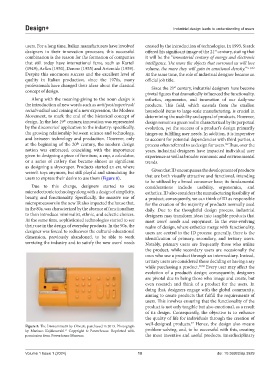
            Figure 8. The Divisumma18 by Olivetti, purchased in 2013. Photograph
                             57
            by Marinco Kojdanovski.  Copyright © Powerhouse. Reprinted with   problem-solving, and, to be successful with this, creating
            permission from Powerhouse Museum                  the most inventive and useful products. Interdisciplinary

            Volume 1 Issue 1 (2024)                         10                               doi: 10.36922/dp.3929

