


Page 26 - DP-2-2
P. 26
Design+                                                                   Climate-adaptive clothing design


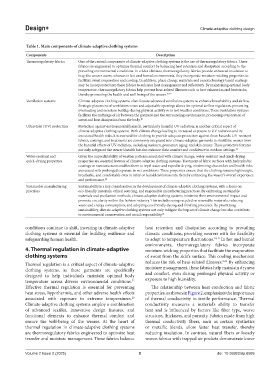
            Table 1. Main components of climate‑adaptive clothing systems
            Components                                             Description
            Thermoregulatory fabrics  One of the central components of climate-adaptive clothing systems is the use of thermoregulatory fabrics. These
                                  fabrics are engineered to optimize thermal comfort by balancing heat retention and dissipation according to the
                                  prevailing environmental conditions. In colder climates, thermoregulatory fabrics provide enhanced insulation to
                                  keep the wearer warm, whereas in hot and humid environments, they incorporate moisture-wicking properties to
                                  facilitate sweat evaporation and cooling. In addition, phase change materials and nanotechnology-based coatings
                                  may be incorporated into these fabrics to enhance heat management and reflectivity. By maintaining optimal body
                                  temperature, thermoregulatory fabrics help prevent heat-related illnesses such as heat exhaustion and heatstroke,
                                  thereby promoting the health and well-being of the wearer. 16,17
            Ventilation systems   Climate-adaptive clothing systems often feature advanced ventilation systems to enhance breathability and airflow.
                                  Strategic placement of ventilation zones and adjustable openings allows for optimal airflow regulation, preventing
                                  overheating and moisture buildup during physical activity or in hot weather conditions. These ventilation systems
                                  facilitate the exchange of air between the garment and the surrounding environment, promoting evaporation of
                                  sweat and heat dissipation from the body. 18
            Ultraviolet (UV) protection  Protection against environmental hazards, particularly harmful UV radiation, is another critical aspect of
                                  climate-adaptive clothing systems. With climate change leading to increased exposure to UV radiation and its
                                  associated health risks, it is essential for clothing to provide adequate protection against these hazards. UV-resistant
                                  fabrics, coatings, and treatments are commonly integrated into climate-adaptive garments to shield the wearer from
                                  the harmful effects of UV radiation, including sunburn, premature aging, and skin cancer. These protective features
                                  not only safeguard the wearer’s health but also enhance their comfort and confidence in outdoor settings. 19
            Water-resistant and   Given the unpredictability of weather patterns associated with climate change, water-resistant and quick-drying
            quick-drying properties  properties are essential features of climate-adaptive clothing systems. Treatment of fabric surfaces with hydrophobic
                                  coatings or nanostructures enables them to repel water and expedite drying, minimizing discomfort and health risks
                                  associated with prolonged exposure to wet conditions. These properties ensure that the clothing remains lightweight,
                                  breathable, and comfortable even in rainy or humid environments, thereby enhancing the wearer’s overall experience
                                  and performance. 20
            Sustainable manufacturing   Sustainability is a key consideration in the development of climate-adaptive clothing systems, with a focus on
            practices             eco-friendly materials, ethical sourcing, and responsible manufacturing practices. By embracing sustainable
                                  materials and production methods, climate-adaptive clothing systems minimize their environmental impact and
                                  promote circularity within the fashion industry. This includes using recycled or renewable materials, reducing
                                  waste and energy consumption, and adopting eco-friendly dyeing and finishing processes. By prioritizing
                                  sustainability, climate-adaptive clothing systems not only mitigate the impact of climate change but also contribute
                                  to environmental conservation and social responsibility. 21


            conditions continue to shift, investing in climate-adaptive   heat retention and dissipation according to prevailing
            clothing systems is essential for building resilience and   climatic conditions, providing wearers with the flexibility
            safeguarding human health.                         to adapt to temperature fluctuations. 16,17  In hot and humid
                                                               environments, thermoregulatory fabrics incorporate
            4. Thermal regulation in climate-adaptive          moisture-wicking properties that facilitate the evaporation
            clothing systems                                   of sweat from the skin’s surface. This cooling mechanism
                                                                                                9,23
            Thermal regulation is a critical aspect of climate-adaptive   reduces the risk of heat-related illnesses.  By enhancing
            clothing systems, as these garments are specifically   moisture management, these fabrics help maintain dryness
            designed to help individuals maintain optimal body   and comfort, even during prolonged physical activity or
                                                         22
            temperature across diverse environmental conditions.    exposure to high humidity.
            Effective thermal regulation is essential for preventing   The relationship between heat conduction and fabric
            heat stress, hypothermia, and other adverse health effects   properties, as shown in Figure 2, emphasizes the importance
            associated with exposure to extreme temperatures.    of thermal conductivity in textile performance. Thermal
                                                         23
            Climate-adaptive clothing systems employ a combination   conductivity measures a material’s ability to transfer
            of advanced textiles, innovative design features, and   heat and is  influenced by factors like  fiber type, weave
            functional elements to enhance thermal comfort and   structure, thickness, and porosity. Fabrics made from high
            ensure the well-being of the wearer. At the heart of   thermal conductivity fibers, such  as certain synthetics
            thermal regulation in climate-adaptive clothing systems   or metallic blends, allow faster heat transfer, thereby
            are thermoregulatory fabrics engineered to optimize heat   reducing insulation. In contrast, natural fibers or loosely
            transfer and moisture management. These fabrics balance   woven fabrics with trapped air pockets demonstrate lower


            Volume 2 Issue 2 (2025)                         5                                doi: 10.36922/dp.8589

