


Page 29 - EER-1-1
P. 29
Explora: Environment
            and Resource                                                        WTW emissions of road and rail transport


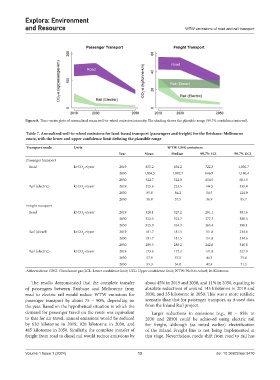
            Figure 8. Time-series plots of normalized mean well-to-wheel emission intensity. The shading shows the plausible range (99.7% confidence interval).


            Table 7. Annualized well‑to‑wheel emissions for land‑based transport (passengers and freight) for the Brisbane–Melbourne
            route, with the lower and upper confidence limit defining the plausible range
            Transport mode      Units                                   WTW GHG emissions
                                                    Year       Mean       Median      99.7% LCL      99.7% UCL
            Passenger transport
             Road               kt CO -e/year       2019       855.2       854.2        722.3         1,006.7
                                    2
                                                    2030      1,004.5     1,002.7       846.9         1,180.4
                                                    2050       522.7       522.0        456.5          601.5
             Rail (electric)    kt CO -e/year       2019       225.6       223.5        144.5          335.4
                                    2
                                                    2030       85.0        84.2          54.5          124.9
                                                    2050       58.0        57.5          36.9          85.7
            Freight transport
             Road               kt CO -e/year       2019       328.1       327.2        281.1          381.6
                                    2
                                                    2030       323.5       322.7        277.7          380.5
                                                    2050       325.0       324.3        263.4          398.1
             Rail (diesel)      kt CO -e/year       2019       181.7       181.5        151.8          214.6
                                    2
                                                    2030       181.7       181.5        151.8          214.6
                                                    2050       289.5       289.2        242.6          340.8
             Rail (electric)    kt CO -e/year       2019       173.6       172.2        131.8          227.0
                                    2
                                                    2030       57.9        57.5          44.3          75.8
                                                    2050       55.3        54.8          42.4          71.5
            Abbreviations: GHG: Greenhouse gas; LCL: Lower confidence limit; UCL: Upper confidence limit; WTW: Well-to-wheel; kt: Kilotonne.

              The results demonstrated that the complete transfer   about 45% in 2019 and 2030, and 11% in 2050, equating to
            of  passengers  between Brisbane and  Melbourne  from   absolute reductions of around 145 kilotonne in 2019 and
            road to electric rail would reduce WTW emissions for   2030, and 35 kilotonne in 2050. This was a more realistic
            passenger transport by about 75 – 90%, depending on   scenario than that for passenger transport, as it used data
            the year. Based on the hypothetical situation in which the   from the Inland Rail project.
            demand for passenger travel on the route was equivalent   Larger reductions in emissions (e.g., 80 – 85% in
            to that for air travel, annual emissions would be reduced   2030 and 2050) could be achieved using electric rail
            by  630  kilotonne  in  2019,  920  kilotonne  in  2030,  and   for freight, although (as noted earlier) electrification
            465 kilotonne in 2050. Similarly, the complete transfer of   of the Inland Freight line is not being implemented at
            freight from road to diesel rail would reduce emissions by   this stage. Nevertheless, mode shift from road to rail has


            Volume 1 Issue 1 (2024)                         13                               doi: 10.36922/eer.3470

