


Page 25 - EER-1-1
P. 25
Explora: Environment
            and Resource                                                        WTW emissions of road and rail transport


            absence of detailed data on average train occupancy (φ (rail,p) ),   based on the computed emissions performance and
            a triangular distribution with a plausible range was also   load characteristics for diesel freight trains. Diesel fuel
                                   29
            assumed (T: 0.75, 0.95, 0.84).  The number of passengers   parameters (lower heating value of 42.68 MJ/kg, and carbon
            per train was then calculated by combining the distributions   content of 3.16 g CO /g fuel), along with a diesel engine
                                                                                2
            of capacity and occupancy in a Monte Carlo simulation. The   to electric efficiency improvement factor (γ, T: 0.30, 0.45,
            weight per individual passenger, in kg and including luggage,   0.35), were used to convert the derived diesel consumption
            was defined as a uniform distribution (U: 90, 100).  (g/train-km) to electricity required (kWh/ train-km). This
                                                               was subsequently combined with the grid-loss-corrected
              A relationship between train capacity (seats) and   emission intensity of the grid (ε , Table 3) and payload
            unladen train weight was also derived from the review. Total   to simulate the GHG emissions performance for electric
                                                                                         grid
            train weight was determined by adding the total mass of all   freight.
            passengers to the empty weight of the train, both of which
            could be defined as a function of train capacity. It was found   The distance distribution for rail freight transport was
            that the passenger weight was between around 7% and 10%   taken to be the same as that for rail passenger transport.
            of the total train mass, and the variation in passenger mass   The average payload (P) for freight trains was assumed
            due to variation in mean occupancy was around 1 – 2% of   to be 1700 tonnes in 2019/2030 and 2,800 tonnes in 2050,
            the total weight. It was, therefore, concluded that, as with   based on the data presented in.  The variability in payload
                                                                                       10
            PVs, the passenger mass correction factor could be set to   (θ (rail,f) ) was modeled as a triangular distribution (T: 700,
            unity, and that train energy consumption and occupancy   2,800, 1,700) in 2019/2030 and (T: 1,800, 3,800, 2,800) in
            could be modeled as independent variables.         2050. The impact of changing payload on the emission
                                                               factor was modeled as follows:
            2.5.3. Rail freight transport
                                                               ω     = (P + 1,750)/3,450 for 2019 and 2030   (III)
            For freight transport, both diesel and electric trains were   (rail, f)
            considered, with direct emissions being calculated for   ω (rail, f)  = (P + 2,700)/5,500 for 2050   (IV)
            diesel only.                                       2.6. Simulation of indirect emissions
              A published average diesel consumption factor for   Indirect emissions for both road and rail transport were
            Australian rail freight  was converted into a TTW   calculated by including upstream (WTT) emissions
                               30
            emission factor as follows:                        associated with the extraction, transport, refining and
            e (rail,f,TTW)  = 4.034 × 2,721 × M (rail,f) /1,000  (II)  distribution of fossil fuels, and the production of electricity
              Where e (rail,f,TTW)  represents TTW emission factor   and H . The approaches for road and rail transport are
                                                                    2
            (g CO -e/train-km); 4.034 is diesel consumption factor   described below.
                 2
            (L/1000 gross tonne-km); 2,721 is CO -e emission factor   2.6.1. Road transport
                                           2
            (g/L); and M (rail, f)  denotes gross train mass tonnes.  For fossil-fueled ICEVs, upstream emissions were modeled
              Average gross train mass was calculated based on   as an energy penalty (λ), reflecting the portion of energy
            assumptions  for  the  weight  of locomotives,  wagons   in the fossil fuels that were consumed within the chain
            (unladen), empty containers and freight payload, balanced   (U:  0.14, 0.28), as estimated in the previous studies.  In
                                                                                                          5,8
            according to the reference train lengths, and masses for   the WTW simulation, this distribution was combined with
            inland rail. The resulting TTW GHG emission factor input   the distributions for TTW emissions (Table 2).
            distributions are given in Table 4.
                                                                 Indirect emissions due to electricity generation and
              To ensure consistency and comparability in the   consumption for BEV charging were also estimated. Inputs
            simulation, emissions for electric freight trains were   were obtained from a previous study  to reflect the distribution
                                                                                          8
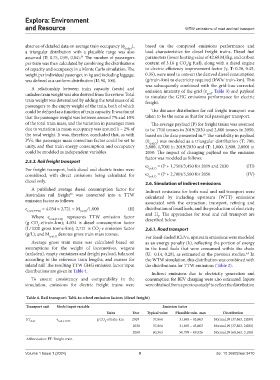
            Table 4. Rail transport: Tabk‑to‑wheel emission factors (diesel freight)

            Transport unit  Model input variable                      Emission factor
                                              Units      Year   Typical value  Plausible min‑ max  Distribution
            FT           e                g CO -e/train-km  2019  37,864     31,865 – 43,863  Normal, N (37,863, 2,000)
              diesel      (rail, f, TTW)      2
                                                         2030     37,864     31,865 – 43,863  Normal, N (37,863, 2,000)
                                                         2050     60,363     50,799 – 69,926  Normal, N (60,363, 3,188)
            Abbreviation: FT: Freight train.


            Volume 1 Issue 1 (2024)                         9                                doi: 10.36922/eer.3470

