


Page 128 - EER-2-1
P. 128
Explora: Environment
            and Resource                                                   Sustainable fertilization for long bean cultivation


                                                               provided an integrated approach to enhancing soil fertility
                                                               while  minimizing  synthetic  inputs. 10,11,25   The  fertilizer
                                                               application rates were predetermined according to the
                                                               experimental treatments.
                                                               2.5. Plant cultivation

                                                               Pre-germinated seeds of V. sinensis L. were transplanted
                                                               into the prepared soil at a spacing of 40 × 60  cm, with
                                                               each  plot  containing  four  plants.  Transplantation  was
                                                               conducted simultaneously across all experimental units to
                                                               ensure uniform growth conditions. Plants were monitored
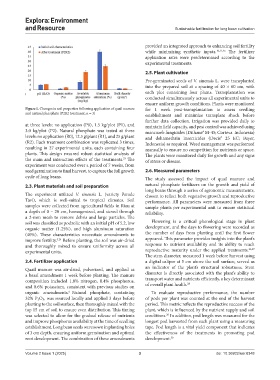
            Figure 1. Changes in soil properties following application of quail manure   for  1  week  post-transplantation  to assess  seedling
            and natural phosphate (P2R2 treatment; n = 3)      establishment and minimize transplant shock before
                                                               further data collection. Irrigation was provided daily to
            at three levels: no application (P0), 1.5 kg/plot (P1), and   maintain field capacity, and pest control was achieved using
            3.0  kg/plot  (P2).  Natural  phosphate  was tested  at three   mancozeb fungicides (Dithane® M-45; Corteva. Indonesia)
            levels: no application (R0), 12.5 g/plant (R1), and 25 g/plant   and deltamethrin insecticides (Decis® 25 EC; Bayer,
            (R2). Each treatment combination was replicated 3 times,   Indonesia) as required. Weed management was performed
            resulting in 27 experimental units, each containing four   manually to ensure no competition for nutrients or space.
            plants. This design ensured robust statistical analysis of   The plants were monitored daily for growth and any signs
            the main and interaction effects of the treatments.  The   of stress or disease.
                                                     23
            experiment was conducted over a period of 7 weeks, from
            seed germination to final harvest, to capture the full growth   2.6. Measured parameters
            cycle of long beans.                               The study assessed the impact of quail manure and

            2.3. Plant materials and soil preparation          natural  phosphate  fertilizers  on the  growth  and  yield  of
                                                               long beans through a series of agronomic measurements,
            The experiment utilized  V. sinensis L. (variety Parade   chosen to reflect both vegetative growth and reproductive
            Tavi), which is well-suited to tropical climates. Soil   performance. All parameters were measured from three
            samples were collected from agricultural fields in Riau at   sample plants per experimental unit to ensure statistical
            a depth of 0 – 20 cm, homogenized, and sieved through   reliability.
            a 2-mm mesh to remove debris and large particles. The
            soil was classified as podzolic with an initial pH of 5.2, low   Flowering is a critical phenological stage in plant
            organic  matter  (1.25%),  and  high  aluminum  saturation   development, and the days to flowering were recorded as
            (40%).  These  characteristics  necessitate  amendments  to   the  number  of  days  from  planting  until  the  first  flower
            improve fertility.  Before planting, the soil was air-dried   appeared. This parameter provides insights into the plant’s
                         3,24
            and thoroughly mixed to ensure uniformity across all   response to nutrient availability and its ability to reach
            experimental units.                                reproductive maturity under the applied treatments. 26,27
                                                               The stem diameter, measured 1 week before harvest using
            2.4. Fertilizer application                        a digital caliper at 5 cm above the soil surface, served as
            Quail manure was air-dried, pulverized, and applied as   an indicator of the plant’s structural robustness. Stem
            a basal amendment 1 week before planting. The manure   diameter is directly associated with the plant’s ability to
            composition  included  1.8%  nitrogen,  0.4%  phosphorus,   transport water and nutrients efficiently, a key determinant
            and 0.6% potassium, consistent with previous studies on   of overall plant health. 28
            organic amendments. Natural phosphate, containing    To evaluate reproductive performance, the number
                              6
            32% P₂O₅, was sourced locally and applied 3 days before   of pods per plant was counted at the end of the harvest
            planting to the soil surface, then thoroughly mixed with the   period. This metric reflects the reproductive success of the
            top 15 cm of soil to ensure even distribution. This timing   plant, which is influenced by the nutrient supply and soil
            was selected to allow for the gradual release of nutrients   conditions.  In addition, pod length was measured for the
                                                                        29
            and improve phosphorus availability at the time of seedling   longest pod harvested from each plant using a measuring
            establishment. Long bean seeds were sown in planting holes   tape. Pod length is a vital yield component that indicates
            of 3 cm depth, ensuring uniform germination and optimal   the effectiveness of the treatments in promoting pod
            root development. The combination of these amendments   development. 30


            Volume 2 Issue 1 (2025)                         3                                doi: 10.36922/eer.8348

