


Page 17 - EER-2-2
P. 17
Explora: Environment
            and Resource                                                        Trace elements in Mediterranean mussels


            A                                B                              C


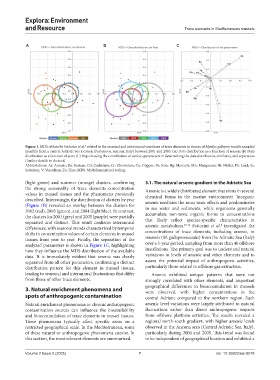
            Figure 1. MDS of data by Fattorini et al.  related to the seasonal and interannual variations of trace elements in tissues of Mytilus galloprovincialis sampled
                                     4
            monthly from a central Adriatic Sea location (Portonovo, Ancona, Italy) between 2001 and 2005. (A) Data distribution as a function of season; (B) Data
            distribution as a function of year; (C) Map showing the contribution of various parameters in determining the data distribution, similarity, and separation
            (further details in the text).
            Abbreviations: As: Arsenic; Ba: Barium; Cd: Cadmium; Cr: Chromium; Cu: Copper; Fe: Iron; Hg: Mercury; Mn: Manganese; Ni: Nickel; Pb: Lead; Se:
            Selenium; V: Vanadium; Zn: Zinc; MDS: Multidimensional scaling.


            (light green) and summer (orange) clusters, confirming   3.1. The natural arsenic gradient in the Adriatic Sea
            the strong seasonality of trace elements concentration   Arsenic is a widely distributed element that exists in several
            values in mussel tissues and the phenomena previously   chemical forms in the marine environment. Inorganic
            described. Interestingly, the distribution of clusters by year   arsenic mediates the most toxic effects and predominates
            (Figure 1B) revealed an overlap between the clusters for   in sea water and sediments, while organisms generally
            2002 (red), 2003 (green), and 2004 (light blue). In contrast,   accumulate  non-toxic  organic  forms  to  concentrations
            the clusters for 2001 (grey) and 2005 (purple) were partially
            separated and distinct. This result confirms interannual   that likely reflect species-specific characteristics in
                                                                                               4
                                                                               30-32
            differences, with seasonal trends characterized by temporal   arsenic metabolism.   Fattorini  et al.  investigated the
            shifts in concentration values of certain elements in mussel   concentrations of trace elements, including arsenic, in
            tissues from year to year. Finally, the separation of the   mussels (M. galloprovincialis) from the Adriatic Sea (Italy)
            analyzed parameters is shown in Figure 1C, highlighting   over a 5-year period, sampling from more than 40 offshore
            how they influence the MDS distribution of the available   installations. The primary goal was to understand natural
            data. It is immediately evident that arsenic was clearly   variations in levels of arsenic and other elements and to
            separated from all other parameters, confirming a distinct   assess the potential impact of anthropogenic activities,
            distribution pattern for this element in mussel tissues,   particularly those related to offshore gas extraction.
            leading to seasonal and interannual fluctuations that differ   Arsenic exhibited unique patterns that were not
            from those of other trace elements.                strongly correlated with other elements, and important

            3. Natural enrichment phenomena and                geographical differences in bioaccumulation in mussels
                                                               were  observed,  with higher concentrations  in the
            spots of anthropogenic contamination               central  Adriatic  compared  to  the  northern  region.  Such
            Natural enrichment phenomena or chronic anthropogenic   arsenic level variations were largely attributed to natural
            contamination sources can influence the bioavailability   fluctuations  rather  than  direct  anthropogenic  impacts
            and bioaccumulation of trace elements in mussel tissues.   from offshore platform activities. The results revealed a
            These phenomena typically affect specific areas on a   regional north-south gradient, with higher arsenic levels
            restricted geographical scale. In the Mediterranean, some   observed in the Ancona area (Central Adriatic Sea, Italy),
            of these natural or anthropogenic phenomena coexist. In   particularly during 2004 and 2005. This trend was found
            this section, the most relevant elements are summarized.  to be independent of geographical location and exhibited a


            Volume 2 Issue 2 (2025)                         7                                doi: 10.36922/eer.8078

