


Page 66 - EER-2-2
P. 66
Explora: Environment
            and Resource                                                           Application of Algae for seed priming


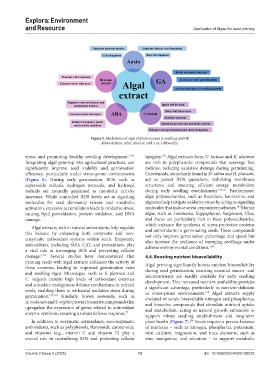
                                        Figure 5. Modulation of algal phytohormones in seedling growth
                                            Abbreviations: ABA: Abscisic acid; GA: Gibberellin.


            stress and promoting healthy seedling development. 3,121    integrity.  Algal extracts from U. lactuca and K. alvarezii
                                                                      125
            Integrating algal priming into agricultural practices, can   are rich in polyphenolic compounds that scavenge free
            significantly  improve  seed  viability  and  germination   radicals, reducing oxidative damage during germinating.
            efficiency, particularly under stress-prone environments   Carotenoids, abundantly found in D. salina and H. pluvialis,
            (Figure  6). During early germination, ROS, such as   act as potent ROS quenchers, stabilizing membrane
            superoxide radicals, hydrogen peroxide, and hydroxyl   structures and ensuring efficient energy metabolism
            radicals are naturally generated as metabolic activity   during early seedling establishment. 126,127  Furthermore,
            increases. While controlled ROS levels act as signaling   algal polysaccharides, such as fucoidans, laminarins, and
            molecules  for seed dormancy release and metabolic   alginates help mitigate oxidative stress by acting as signaling
                                                                                                      104
            activation, excessive accumulation leads to oxidative stress,   molecules that induce stress-responsive pathways. Marine
            causing lipid peroxidation, protein oxidation, and DNA   algae, such as Laminaria, Kappaphycus, Sargassum, Ulva,
            damage.                                            and  Fucus are particularly rich in these polysaccharides,
                                                               which enhance the synthesis of stress-protective proteins
              Algal extracts, rich in natural antioxidants, help regulate
            this balance by enhancing both enzymatic and non-  and antioxidants in germinating seeds. These compounds
                                                               not only improve germination percentage and speed but
            enzymatic  antioxidant  systems  within  seeds.  Enzymatic   also increase the resilience of emerging seedlings under
            antioxidants, including SOD, CAT, and peroxidases, play   adverse environmental conditions. 4,96
            a vital role in scavenging ROS and preventing cellular
            damage. 3,122  Several studies have demonstrated that   4.4. Boosting nutrient bioavailability
            priming seeds with algal extracts enhances the activity of   Algal priming significantly boosts nutrient bioavailability
            these enzymes, leading to improved germination rates   during  seed  germination, ensuring  essential macro-  and
            and seedling vigor. Microalgae, such as  S. platensis and   micronutrients are readily available for early seedling
            C. vulgaris contain high levels of antioxidant enzymes   development. This increased nutrient availability provides
            and stimulate endogenous defense mechanisms in primed   a significant advantage, particularly in nutrient-deficient
            seeds, enabling them to withstand oxidative stress during   or stress-prone environments.  Algal extracts supply
                                                                                        128
            germination. 123,124  Similarly, brown seaweeds, such as   chelated minerals, bioavailable nitrogen and phosphorus,
            A. nodosum and S. wightii provide bioactive compounds that   and bioactive compounds that stimulate nutrient uptake
            upregulate the expression of genes related to antioxidant   and metabolism, acting as natural growth enhancers to
            enzyme synthesis, ensuring a robust defense response. 77
                                                               support robust seedling establishment and long-term
              In addition to enzymatic antioxidants, non-enzymatic   plant health (Figure 7).  Seeds require a precise balance
                                                                                  129
            antioxidants, such as polyphenols, flavonoids, carotenoids,   of nutrients – such as nitrogen, phosphorus, potassium,
            and vitamins (e.g., vitamin C and vitamin E) play a   iron, calcium, magnesium, and trace elements, such as
            crucial role in neutralizing ROS and protecting cellular   zinc, manganese, and selenium – to support metabolic


            Volume 2 Issue 2 (2025)                         13                          doi: 10.36922/EER025120025

