


Page 63 - EER-2-2
P. 63
Explora: Environment
            and Resource                                                           Application of Algae for seed priming


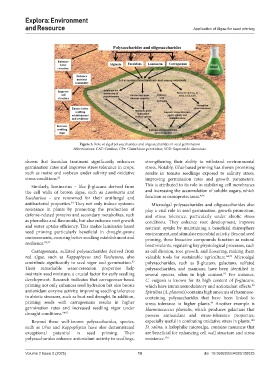
                                   Figure 3. Role of algal polysaccharides and oligosaccharides in seed germination
                                Abbreviations: CAT: Catalase; GPx: Glutathione peroxidase; SOD: Superoxide dismutase.

            shown that fucoidan treatment significantly enhances   strengthening their ability to withstand environmental
            germination rates and improves stress tolerance in crops,   stress. Notably, Ulva-based priming has shown promising
            such as maize and soybean under salinity and oxidative   results in tomato seedlings exposed to salinity stress,
            stress conditions. 83                              improving germination rates and growth parameters.
              Similarly, laminarins – like  β-glucans derived from   This is attributed to its role in stabilizing cell membranes
            the cell walls of brown algae, such as  Laminaria and   and increasing the accumulation of soluble sugars, which
            Saccharina – are renowned for their antifungal and   function as osmoprotectants. 4,96
            antibacterial properties.  They not only induce systemic   Microalgal polysaccharides and oligosaccharides also
                               91
            resistance in plants by promoting the production of   play a vital role in seed germination, growth promotion,
            defense-related proteins and secondary metabolites, such   and stress tolerance, particularly under abiotic stress
            as phenolics and flavonoids, but also enhance root growth   conditions. They enhance root development, improve
            and water uptake efficiency. This makes laminarin-based   nutrient uptake by maintaining a beneficial rhizosphere
            seed priming particularly beneficial in drought-prone   environment, and stimulate microbial activity. Beyond seed
            environments, ensuring better seedling establishment and   priming, these bioactive compounds function as natural
            resilience. 83,92                                  biostimulants, regulating key physiological processes, such
              Carrageenans, sulfated polysaccharides derived from   as cell division, root growth, and flowering, making them
            red algae, such as  Kappaphycus and  Eucheuma, also   valuable tools for sustainable agriculture. 64,73  Microalgal
            contribute significantly to seed vigor and germination.    polysaccharides, such as  β-glucans, galactans, sulfated
                                                         93
            Their remarkable water-retention properties help   polysaccharides, and mannans, have been identified in
            maintain seed moisture, a crucial factor for early seedling   several species, often in high content.  For instance,
                                                                                                97
            development. Research indicates that carrageenan-based   C. vulgaris is known for its high content of  β-glucans,
            priming not only enhances seed hydration but also boosts   which have immunomodulatory and antioxidant effects.
                                                                                                            98
            antioxidant enzyme activity, improving seedling tolerance   Spirulina (A. platensis) contains high amounts of rhamnose-
            to abiotic stressors, such as heat and drought. In addition,   containing polysaccharides that have been linked to
            priming seeds with carrageenans results in higher   stress tolerance in higher plants.  Another example is
                                                                                           99
            germination rates and increased seedling vigor under   Haematococcus pluvialis, which produces galactans that
            drought conditions. 94,95                          possess antioxidant and stress-tolerance properties,
                                                                                                            100
              Beyond these well-known polysaccharides, species,   especially useful in combating oxidative stress in plants.
            such as  Ulva  and  Kappaphycus have also demonstrated   D. salina, a halophilic microalga, contains mannans that
            exceptional  potential  in  seed  priming.  Their  are beneficial for enhancing cell wall structure and stress
            polysaccharides enhance antioxidant activity in seedlings,   resistance. 101


            Volume 2 Issue 2 (2025)                         10                          doi: 10.36922/EER025120025

