


Page 95 - EER-2-2
P. 95
Explora: Environment
            and Resource                                               Assessing ecosystems by land cover and landscapes


                                                      Map of landscape zones

                              Intersection of maps    Intersection of maps    Intersection of maps

                           Land cover data ESA 2021  Land cover data ESRI 2023  Land cover data ESRI 2017


                           LLCC map according to  LLCC map according to ESRI  LLCC map according to ESRI
                                ESA 2021                  2023                     2017


                            Zonal statistical analysis  Zonal statistical analysis  Zonal statistical analysis

                            Map of provincial         Map of provincial        Map of provincial
                              boundaries                boundaries               boundaries


                            Statistical tables and   Statistical tables and  Statistical tables and
                            diagrams according to   diagrams according to   diagrams according to
                                ESA 2021                ESRI 2023               ESRI 2017


                                     Assessment of applicability  Examples of accounting of
                                       of tested approach     changes from 2017 to 2023

                                          Inputs       Outputs     Steps of process
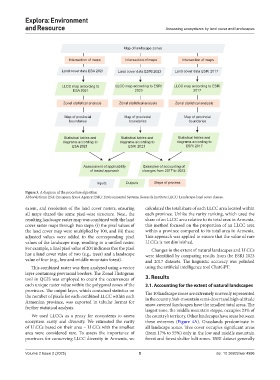
            Figure 3. A diagram of the procedure algorithm
            Abbreviations: ESA: European Space Agency; ESRI: Environmental Systems Research Institute; LLCC: Landscape-land cover classes.
            extent, and resolution of the land cover rasters, ensuring   calculated the total share of each LLCC area located within
            all maps shared the same pixel-wise structure. Next, the   each province. Unlike the rarity ranking, which used the
            resulting landscape raster map was combined with the land   share of an LLCC area relative to its total area in Armenia,
            cover raster maps through two steps: (i) the pixel values of   this method focused on the proportion of an LLCC area
            the land cover map were multiplied by 100, and (ii) these   within a province compared to its total area in Armenia.
            adjusted  values  were  added  to  the  corresponding  pixel   This approach was applied to ensure that the value of rare
            values of the landscape map, resulting in a unified raster.   LLCCs is not diminished.
            For example, a final pixel value of 204 indicates that the pixel   Changes in the extent of natural landscapes and LLCCs
            has a land cover value of two (e.g., trees) and a landscape   were identified by comparing results from the ESRI 2023
            value of four (e.g., low and middle mountain forest).  and 2017 datasets. The linguistic accuracy was polished
              This combined raster was then analyzed using a vector   using the artificial intelligence tool ChatGPT.
            layer containing provincial borders. The Zonal Histogram
            tool in QGIS was employed to count the occurrences of   3. Results
            each unique raster value within the polygonal zones of the   3.1. Accounting for the extent of natural landscapes
            provinces. The output layer, which contained statistics on   The 10 landscape zones are extremely unevenly represented
            the number of pixels for each combined LLCC within each   in the country. Sub-mountain semi-desert and high-altitude
            Armenian province, was exported in tabular format for   snow-covered landscapes have the smallest total areas. The
            further statistical analysis.
                                                               largest zone, the middle mountain steppe, occupies 23% of
              We used LLCCs as a proxy for ecosystems to assess   the country’s territory. Other landscapes have areas between
            ecosystem rarity and diversity. We estimated the rarity   these extremes (Figure  4A). Grasslands predominate in
            of LLCCs based on their area – LLCCs with the smallest   all landscape zones. Tree cover occupies significant areas
            area were considered rare. To assess the importance of   (from 17% to 55%) only in the low and middle mountain
            provinces for conserving LLCC diversity in Armenia, we   forest and forest shelter belt zones. ESRI dataset generally


            Volume 2 Issue 2 (2025)                         5                                doi: 10.36922/eer.4996

