


Page 19 - EER-2-3
P. 19
Explora: Environment
            and Resource                                                         Environmental contamination of titanium


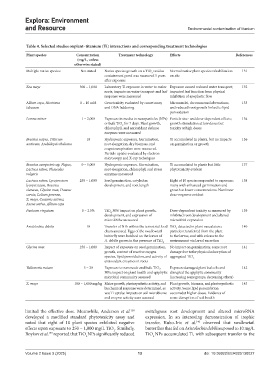
            Table 4. Selected studies onplant–titanium (Ti) interactions and corresponding treatment technologies
            Plant species         Concentration    Treatment technology  Effects                     References
                                  (mg/L, unless
                                 otherwise stated)
            Multiple native species  Not stated  Native species growth on a TiO  residue   Normal native plant species rehabilitation   131
                                                                 2
                                             containment pond was measured 5 years  on site
                                             after exposure
            Zea mays               300 – 1,000  Laboratory Ti exposure in water to maize  Exposure caused reduced water transport;   132
                                             roots; impacts on water transport and leaf  impacted leaf function from physical
                                             response were measured      inhibition of apoplastic flow
            Allium cepa, Nicotiana   0 – 10 mM  Genotoxicity evaluated by comet assay   Micronuclei, chromosomal aberrations,   133
            tabacum                          and DNA laddering           and reduced root growth linked to lipid
                                                                         peroxidation
            Lemna minor             1 – 2,000   Exposure in media to nanoparticles (NPs)  Particle size- and dose-dependent effects;   134
                                             or bulk TiO  for 7 days. Plant growth,   growth stimulation at low doses but
                                                     2
                                             chlorophyll, and antioxidant defense   toxicity at high doses
                                             enzymes were measured
            Brassica napus, Triticum   10    Hydroponic exposure. Germination,   Ti accumulated in planta, but no impacts   136
            aestivum, Arabidopsis thaliana   root elongation, dry biomass, and   on germination or growth
                                             evapotranspiration were measured.
                                             Particle uptake evaluated by electron
                                             microscopy and X-ray techniques
            Brassica campestris ssp. Napus,   0 – 5,000  Hydroponic exposure. Germination,   Ti accumulated in plants but little   137
            Lactuca sativa, Phaseolus        root elongation, chlorophyll and stress   phytotoxicity evident
            vulgaris                         enzymes measured
            Lactuca sativa, Lycopersicon   250 – 1,000  Seed germination, cotyledon   Eight of 10 species responded to exposure;   138
            lycopersicum, Brassica           development, and root length  many with enhanced germination and
            oleracea, Glycine max, Daucus                                growth at lower concentrations. Nonlinear
            carota, Lolium perenne,                                      dose-response evident
            Z. mays, Cucumis sativus,
            Avena sativa, Allium cepa
            Panicum virgatum        0 – 2.5%  TiO  NPs’ impact on plant growth,   Dose-dependent toxicity as measured by   139
                                                2
                                             development, and expression of   inhibited root development and altered
                                             microRNAs measured          microRNA expression
            Aristolochia debilis      10     Transfer of NPs within the terrestrial food  TiO  detected in plant vasculature;   140
                                                                            2
                                             chain assessed. Eggs of the swallowtail   particles transferred from the plant
                                             butterfly were hatched on the leaves of    to the larvae, and with release to the
                                             A. debilis grown in the presence of TiO 2  environment via larval excretion
            Glycine max            250 – 1,000  Impact of exposure on seed germination,  No impact on germination; some root   141
                                             growth, content of reactive oxygen   damage due tothe physical adsorption of
                                             species, lipid peroxidation, and activity of  aggregated TiO 2
                                             antioxidant enzymes in roots
            Vallisneria natans       5 – 20  Exposure to nanoscale and bulk TiO₂   Exposure damaged plant leaf cells and   142
                                             NPs; impact on plant health and epiphytic  disrupted the epiphytic community
                                             microbial community assessed  (increasing some groups, decreasing others)
            Z. mays              100 – 1,000 mg/kg Maize growth, photosynthetic activity, and  Plant growth, biomass, and photosynthetic   143
                                             biochemical response were determined, as  activity. Some lipid peroxidation
                                             was Ti uptake. Impacts on soil microbiome  occurredat higher doses. Evidence of
                                             and enzyme activity were assessed  some disruption of soil health


            limited the effective dose. Meanwhile, Andersen  et  al.    switchgrass  root  development  and  altered  microRNA
                                                         138
            developed a modified standard phytotoxicity assay and   expression. In an interesting demonstration of trophic
            noted that eight of 10 plant species exhibited negative   transfer, Kubo-Irie  et al.  observed that swallowtail
                                                                                    140
            effects upon exposure to 250 – 1,000 mg/L TiO . Similarly,   butterflies that fed on Aristolochia debilisexposed to 10 mg/L
                                                 2
            Boykov et al.  reported that TiO NPs significantly reduced   TiO NPs accumulated Ti, with subsequent transfer to the
                      139
                                      2
                                                                  2
            Volume 2 Issue 3 (2025)                         13                          doi: 10.36922/EER025130027

