


Page 20 - EER-2-3
P. 20
Explora: Environment
            and Resource                                                         Environmental contamination of titanium


            environment from excretion. More recently, de Melo et al.    TiO  NPsled to significant root tissue damage, largely
                                                         141
                                                                   2
            observed that exposure of soybean to 250 – 1,000  mg/L   through particle adsorption and direct physical interaction.
                                                               Similarly, Alklaf  et  al.  reported that exposure of the
                                                                                 142
                                                               aquatic plant Vallisneria natans to 5 – 20 mg/L anatase for
                                                               30  days resulted in damaged leaf cells, altered epiphytic
                                                               species composition, and reduced interaction intensity
                                                               among the epiphytic genera in the microbiome. Bakshi and
                                                               Kumar  reported that exposure of corn grown in soil to
                                                                    143
                                                               TiO  NPs at concentrations of 100 – 1,000 mg/kg had little
                                                                  2
                                                               impact on growth  or photosynthesis.  However, oxidative
                                                               stress and Ti uptake were observed at the high dose range.
                                                               Similar observations were reported for green pea (Pisum
                                                               sativum L.) at 10 – 100 mg/L TiO  NPs. 144
                                                                                         2
                                                               5. Risk management of Ti in the
                                                               contaminated environment
                                                               5.1. Remediation of Ti-contaminated soil
                                                               The investigation of Ti removal from the environment
                                                               is limited due to the generally perceived low biological
                                                               toxicity of the element.  However, with the escalating
                                                                                  145
                                                               utilization of Ti-containing products and the emergence
                                                               of negative incidents, such as the European Food Safety
                                                               Authority (EFSA)’s prohibition on the use of nano/micro
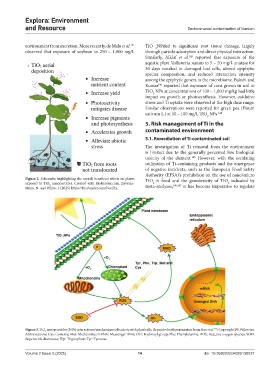
            Figure 2. Schematic highlighting the overall beneficial effects on plants   TiO in food and the genotoxicity of TiO indicated by
            exposed to TiO  nanoparticles. Created with BioRender.com. Zuverza-  2   146,147      2
                      2
            Mena, N. and White, J. (2025) https://BioRender.com/lwvj7lx.  meta-analyses,   it  has become imperative to  regulate


            Figure 3. TiO  nanoparticles (NPs) interactions/mechanisms of toxicity with plant cells. Reprinted with permission from Hou et al. ; Copyright 2019 Elsevier.
                                                                                            135
                    2
            Abbreviations: Cys: Cysteine; Met: Methionine; mRNA: Messenger RNA; OH: Hydroxyl group; Phe: Phenylalanine; ROS: Reactive oxygen species; SOD:
            Superoxide dismutase; Trp: Tryptophan; Tyr: Tyrosine.
            Volume 2 Issue 3 (2025)                         14                          doi: 10.36922/EER025130027

