


Page 110 - EJMO-9-1
P. 110
Eurasian Journal of Medicine and
            Oncology
                                                                         Genomics of breast cancer in Western Kazakhstan


                                                               (controls). We identified 28 statistically significant
                                                               polymorphisms associated with the risk of developing BC,
                                                               seven of which were previously included in the GWAS
                                                               catalog:  RARG (Rs2229774),  FGFR2 (Rs2981582),  ATM
                                                               (Rs1800057), MAP3K1 (Rs889312), BRCA2 (Rs11571833),
                                                               FGFR2 (Rs7895676), and  FGFR2 (Rs1219648).  Table  11
                                                               presents the key characteristics of these 28 polymorphisms,
                                                               which are associated with BC risk in women from the
                                                               Aktobe region.

                                                                 The case–control study design provides a framework
                                                               for comparing the relationship between BC risk and
                                                               individual polymorphisms with existing literature on the
                                                               genetic contribution to BC development. Bioinformatics
                                                               analysis is important for determining the specific effects
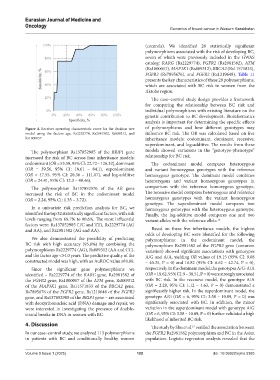
            Figure  4. Receiver operating characteristic curve for the decision tree   of polymorphisms and how different genotypes may
            model using the factors age, Rs2229774, Rs2981582, Rs889312, and   influence BC risk. The OR was calculated based on five
            Rs1800057                                          inheritance models: codominant, dominant, recessive,
                                                               superdominant, and log-additive. The results from these
              The polymorphism Rs137852985 of the  BRIP1 gene   models showed variations in the “genotype-phenotype”
            increased the risk of BC across four inheritance models:   relationship for BC risk.
            codominant (OR = 53.58, 95% CI: 22.72 – 126.32), dominant   The  codominant  model  compares  heterozygous
            (OR = 39.56, 95% CI: 18.61 – 84.1), superdominant   and variant homozygous genotypes with the reference
            (OR = 47.55, 95% CI: 20.36 – 111.07), and log-additive   homozygous genotype. The dominant model combines
            (OR = 24.41, 95% CI: 12.3 – 48.46).                heterozygous  and  variant  homozygous  genotypes  in
              The polymorphism Rs137852576 of the  AR gene     comparison with the reference homozygous genotype.
            increased the risk of BC in the codominant model   The recessive model compares heterozygous and reference
            (OR = 2.24, 95% CI: 1.35 – 3.72).                  homozygous genotypes with the variant homozygous
                                                               genotype. The superdominant model compares two
              In a univariate risk prediction analysis for BC, we   homozygous genotypes with the heterozygous genotype.
            identified the top 32 statistically significant factors, with risk   Finally, the log-additive model compares one  and two
            levels ranging from 69.7% to 90.6%. The most influential   variant alleles with the reference allele. 12
            factors were: Rs137852985 (TC and TT), Rs2229774 (AG
            and AA), and Rs2981582 (AG and AA).                  Based  on  these  five  inheritance  models,  the  highest
                                                               odds of developing BC were identified for the following
              We also demonstrated the possibility of predicting   polymorphisms: in the codominant model, the
            BC risk with high accuracy (95.8%) by combining the   polymorphism Rs2981582 of the  FGFR2 gene (common
            polymorphisms Rs2229774 (AG), Rs889312 (AA and CC),   variation) showed significant associations with genotypes
            and the factor age <54.0 years. The predictive quality of the   A/G and A/A, yielding OR values of 19.15 (95% CI: 9.08
            constructed model was high, with an AuROC value of 0.88.  – 40.35, P = 0) and 16.82 (95% CI: 6.62 – 42.74, P = 0),

              Since the significant gene polymorphisms we      respectively. In the dominant model, the genotypes A/G-A/A
            identified – Rs2229774 of the RARG gene, Rs2981582 of   (OR = 18.62, 95% CI: 9 – 38.51, P = 0) were strongly associated
            the FGFR2 gene, Rs1800057 of the ATM gene, Rs889312   with BC risk. In the recessive model, the genotype  A/A
            of the  MAP3K1  gene, Rs11571833 of  the  BRCA2  gene,   (OR = 2.28, 95% CI: 1.12 – 4.63, P  = 0) demonstrated a
            Rs7895676 of the FGFR2 gene, Rs1219648 of the FGFR2   significantly higher risk. In the superdominant model, the
            gene, and Rs137852985 of the BRIP1 gene – are associated   genotype A/G (OR = 6, 95% CI: 3.58 – 10.09, P = 0) was
            with deoxyribonucleic acid (DNA) damage and repair, we   significantly associated with BC. In addition, the minor
            were interested in investigating the presence of double-  variation in the superdominant model with genotype A/G
            strand breaks in DNA in women with BC.             (OR = 6, 95% CI: 3.58 – 10.09, P = 0) further validated a high
                                                               likelihood of inherited BC risk.
            4. Discussion                                        The study by Shu et al.  verified the association between
                                                                                   13
            In our case–control study, we analyzed 113 polymorphisms   the FGFR2 Rs2981582 polymorphism and BC in the Asian
            in patients with BC and conditionally healthy women   population. Logistic regression analysis revealed that the


            Volume 9 Issue 1 (2025)                        102                              doi: 10.36922/ejmo.5385

