


Page 257 - EJMO-9-1
P. 257
Eurasian Journal of
            Medicine and Oncology                              Quality of life, somatosensory amplification, and stress in ADPKD


            and was developed by Barsky  et al.  Each question is   respect to categorical variables. Pearson’s correlation test
                                          32
            scored between 1 and 5. The total score is considered the   was used for variables that were normally distributed. In
            amplification score. A Turkish validity and reliability study   addition, a regression model and binary logistic regression
            was carried out by Güleç and Sayar.  The Turkish version of   analysis were performed. A  p-value of 0.05 denotes
                                       33
            the SSAS has demonstrated acceptable internal consistency,   statistical significance.
            with Cronbach’s alpha values ranging from 0.62 to 0.76. In
            addition, the test-retest reliability coefficient was reported   2.6. Ethical consideration
            as 0.73, further supporting the scale’s consistency over   This study obtained ethical approval from the University
            time.  The Cronbach’s alpha of this study was 0.64, which   Ethic Committee (approval number: 29533901-050.99-
                33
            is acceptable for reliability and validity.        14210/2022) and Helsinki Declaration guidelines were
                                                               followed during the study. Informed consent was obtained
            2.4. The Perceived Stress Scale (PSS)              from all participants.
            The PSS-10, which was validated and translated into
            Turkish by Eskin et al.,  was used to assess stress levels.   3. Results
                               34
            The Turkish version was also found to have adequate   The average age of patients with PKD (n = 48) was 34.12 ±
            reliability and validity to measure stress level. The PSS-10   7.27 years and that of the healthy group (n = 50) was 33.74
            deals with feelings and thoughts that participants reflect on   ± 6.34 years. There was no statistically significant difference
            their current life situations. It is a Likert scale to measure   between the two groups in terms of age, total education
            stress levels (0 = Never, 1 = Almost never, 2 = Sometimes,   time, and total working time (p > 0.05), but there was a
            3  =  Fairly  often,  and  4  =  Very  often).  The  higher  the   statistically significant difference in gender (p = 0.000)
            score, the higher the level of stress. The scale correlates   (Table 1). The average HRQOL score for the ADPKD group
            with depression and perception of poorer health. The   was 14.83 ± 8.73, whereas that for the healthy group was
            Cronbach’s alpha coefficient for the PSS generally ranges   20.16 ± 8.46, and the difference between the two group was
            from 0.70 to 0.90. The Cronbach’s alpha coefficient for this   statistically significant (t = 3.342, p = 0.012). The average
            study was determined as 0.75.                      PSS score of the PKD group was 26.82 ± 15.32 and that
                                                               of healthy group was 12.45 ± 6.12, which were statistically
            2.5. Statistical analysis                          different from each other (t = 4.214, p < 0.001). The average
            Statistical analysis was performed using the Statistical   SSAS score of the PKD group was 32.30 ± 8.64, which was
            Package for the Social Sciences 25.0 (IBM Inc., Chicago, IL,   significantly higher than the score of 20.29 ± 9.36 in the
            USA). The mean and standard deviation were calculated   healthy group (t = 5.664, p < 0.001). The total education
            for each group as a descriptive analysis. The Kolmogorov–  time for the PKD group was 12.28 ± 4.94, whereas that
            Smirnov test was used to test for normality. The Student’s   of the healthy group was 16.44 ± 8.52, and the difference
            t-test was performed to compare the mean of the groups.   between these scores was not statistically significant
            The Chi-square test was used to compare groups with   (U = 918.6, p = 0.463). The total working time for the PKD

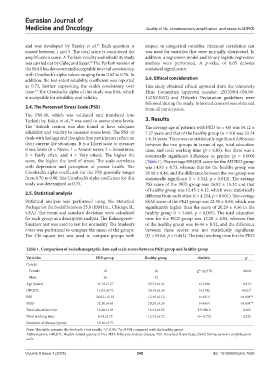
            Table 1. Comparison of sociodemographic data and scale scores between PKD group and healthy group

            Variables                     PKD group           Healthy group          Statistic           p
            Gender
             Female                          12                    18                χ =12.378          0.000
                                                                                      2
             Male                            36                    32
            Age (years)                   34.12±7.27            33.74±6.34            t=1408            0.213
            HRQOL                         14.83±8.73            20.16±8.46            t=3342            0.012*
            PSS                           26.82±15.32           12.45±6.12            t=4214           <0.001**
            SSAS                          32.30±8.64            20.29±9.36            t=5664           <0.001**
            Total education time          12.28±4.94            16.44±8.52           U=918.6            0.463
            Total working time             8.44±5.73            12.33±6.72           t=−0.772           0.226
            Duration of disease (years)   12.46±5.77
            Note: This table presents the Student’s t-test results. *P<0.05; **p<0.001 compared with the healthy group.
            Abbreviations: HRQOL: Health-related quality of life; PKD: Polycystic kidney disease; PSS: Perceived Stress Scale, SSAS: Somatosensory amplification
            scale.


            Volume 9 Issue 1 (2025)                        249                              doi: 10.36922/ejmo.7550

