


Page 258 - EJMO-9-1
P. 258
Eurasian Journal of
            Medicine and Oncology                              Quality of life, somatosensory amplification, and stress in ADPKD


            group was 8.44 ± 5.73 compared with 12.33 ± 6.72 for the   between  the  duration  of  disease  and  PSS  (r  =  −0.321,
            healthy group, and the difference between these was not   p = 0.032), indicating that as the duration of the disease
            statistically significant (t = −0.772, p = 0.226) (Table 1).  increases, perceived stress decreases. In addition, there
                                                               is a significant positive correlation between the duration
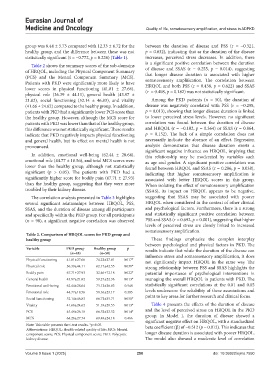
              Table 2 shows the summary scores of the sub-domains
            of HRQOL, including the Physical Component Summary   of disease and SSAS (r = 0.255,  p = 0.014), suggesting
            (PCS)  and the Mental Component  Summary  (MCS).   that longer disease duration is associated with higher
            Patients with PKD were significantly more likely to have   somatosensory amplification. The correlation between
                                                               HRQOL and both PSS (r = 0.438, p = 0.622) and SSAS
            lower scores in physical functioning (41.81 ± 27.66),   (r  = 0.408, p = 0.182) was not statistically significant.
            physical role (36.39 ± 44.11), general health (43.97 ±
            21.82), social functioning (52.14 ± 46.83), and vitality   Among the PKD patients (n = 50), the duration of
            (41.66 ± 24.62) compared to the healthy group. In addition,   disease was negatively correlated with PSS (r = −0.298,
            patients with PKD had a significantly lower PCS score than   p = 0.013), showing that longer disease duration is linked
            the healthy group. However, although the MCS score for   to lower perceived stress levels. However, no significant
            patients with PKD was lower than that of the healthy group,   correlation was found between the duration of disease
            this difference was not statistically significant. These results   and HRQOL (r = −0.102, p = 0.364) or SSAS (r = 0.864,
            indicate that PKD negatively impacts physical functioning   p = 0.152). The lack of a simple correlation does not
            and general health, but its effect on mental health is not   necessarily indicate the absence of an effect. Regression
            pronounced.                                        analysis demonstrates that disease duration exerts a
                                                               significant negative influence on HRQOL, implying that
              In addition, emotional well-being (62.44 ± 28.64),   this relationship may be moderated by variables such
            emotional role (44.77 ± 18.56), and total MCS scores were   as age and gender. A significant positive correlation was
            lower than the healthy group, although not statistically   found between HRQOL and SSAS (r = 0.286, p = 0.038),
            significant (p > 0.05). The patients with PKD had a   indicating that higher somatosensory amplification is
            significantly higher score for bodily pain (67.71 ± 27.93)   associated  with  better  HRQOL  scores  in  this  group.
            than  the  healthy  group,  suggesting  that  they  were  more   When isolating the effect of somatosensory amplification
            troubled by their kidney disease.                  (SSAS), its impact on HRQOL appears to be negative,
              The correlation analysis presented in Table 3 highlights   suggesting that SSAS may be associated with poorer
            several significant relationships between HRQOL, PSS,   HRQOL when considered in the context of other clinical
            SSAS, and the duration of disease among all participants   and psychological factors. Furthermore, there is a strong
            and specifically within the PKD group. For all participants   and statistically significant positive correlation between
            (n = 98), a significant negative correlation was observed   PSS and SSAS (r = 0.692, p = 0.001), suggesting that higher
                                                               levels  of  perceived  stress  are  closely  linked  to increased
                                                               somatosensory amplification.
            Table 2. Comparison of HRQOL scores for PKD group and
            healthy group                                        These findings emphasize the complex interplay
                                                               between psychological and physical factors in PKD. The
            Variable         PKD group   Healthy group   p     results indicate that while the duration of the disease can
                               (n=48)      (n=50)
            Physical functioning  41.81±27.66  74.22±27.81  0.017*  influence stress and somatosensory amplification, it does
                                                               not significantly impact HRQOL in the same way. The
            Physical role    36.39±44.11  62.17±42.55  0.038*  strong relationship between PSS and SSAS highlights the
            Bodily pain      67.71±27.93  32.46±72.18  0.022*  potential importance of psychological interventions in
            General health   43.97±21.82  59.27±22.36  0.013*  managing the overall HRQOL in patients with PKD. The
            Emotional well-being  62.44±28.64  75.12±26.83  0.548  statistically  significant  correlations  at  the  0.01  and  0.05
            Emotional role   44.77±18.56  58.16±23.17  0.385   levels underscore the reliability of these associations and
            Social functioning  52.14±46.83  66.72±35.71  0.050*  point to key areas for further research and clinical focus.
            Vitality         41.66±24.62  51.18±29.55  0.013*    Table 4 presents the effects of the duration of disease
            PCS              45.49±26.18  66.52±23.52  0.014*  and the level of perceived stress on HRQOL in the PKD
            MCS              64.26±27.74  69.48±24.18  0.466   group. In Model 1, the duration of disease showed a
                                                               significant negative effect on HRQOL, with a standardized
            Note: This table presents the t-test results. *p<0.05.  beta coefficient (β) of −0.512 (p = 0.012). This indicates that
            Abbreviations: HRQOL: Health-related quality of life; MCS: Mental
            component score; PCS: Physical component score; PKD: Polycystic   longer disease duration is associated with poorer HRQOL.
            kidney disease.                                    The  model also  showed a  moderate  level  of correlation


            Volume 9 Issue 1 (2025)                        250                              doi: 10.36922/ejmo.7550

