


Page 34 - EJMO-9-2
P. 34
Eurasian Journal of
            Medicine and Oncology                                                    Gut microbiome effects on obesity


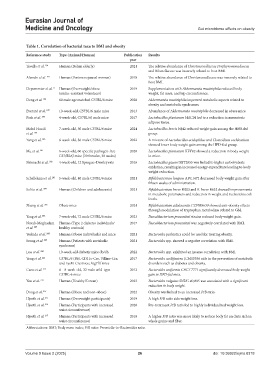
            Table 1. Correlation of bacterial taxa to BMI and obesity
            Reference study  Type (Animal/Human)      Publication   Results
                                                        year
            Tavella et al.  194  Human (Italian elderly)  2021  The relative abundance of Christensenellaceae Porphyromonadaceae
                                                                and Rikenellaceae was inversely related to host BMI.
            Alemán et al.  195  Human (Postmenopausal women)  2018  The relative abundance of Christensenellaceae was inversely related to
                                                                host BMI.
            Depommier et al.  11  Human (Overweight/obese   2019  Supplementation with Akkermansia muciniphila reduced body
                          insulin-resistant volunteers)         weight, fat mass, and hip circumference.
            Deng et al.  196  60 male age matched C57BL/6 mice  2020  Akkermansia muciniphila improved metabolic aspects related to
                                                                obesity and metabolic syndromes.
            Everard et al.  197  10-week-old, C57BL/6 male mice  2013  Abundance of Akkermansia muciniphila decreased in obese mice.
            Park et al.  198  4-week-old, C57BL/6J male mice  2017  Lactobacillus plantarum HAC01 led to a reduction in mesenteric
                                                                adipose tissue.
            Mohd Hasali   7-week-old, 30 male C57BL/6 mice   2024  Lactobacillus brevis NJ42 reduced weight gain among the HFD-fed
            et al.  199                                         group.
            Yang et al.  200  6-week-old, 36 male C57BL/6 mice  2022  A mixture of Lactobacillus acidophilus and Clostridium cochlearium
                                                                showed lower body weight gain among the HFD-fed group.
            Mu et al.  201  6-week-old, 60 specific pathogen-free   2020  Lactobacillus plantarum KFY02 showed a reduction in body weight
                          C57/BL6J mice (30 females, 30 males)  in mice.
            Shirouchi et al.  202  4-week-old, 12 Sprague–Dawley rats  2016  Lactobacillus gasseri SBT2055 was linked to higher carbohydrate
                                                                oxidation, resulting in increased energy expenditure leading to body
                                                                weight reduction.
            Schellekens et al.  203  5-week-old, 40 male C57BL/6 mice   2021  Bifidobacterium longum APC1472 decreased body weight gain after
                                                                fifteen weeks of administration.
            Solito et al.  204  Human (Children and adolescents)  2021  Bifidobacterium breve BR03 and B. breve B632 showed improvements
                                                                in metabolic parameters and reduction in weight and Escherichia coli
                                                                levels.
            Zhang et al.  205  Obese mice               2024    Bifidobacterium adolescentis CCFM8630 showed anti-obesity effects
                                                                through modulation of tryptophan metabolism related to GM.
            Yang et al.  206  7-week-old, 72 male C57BL/6 mice  2023  Faecalibacterium prausnitzii strains reduced body weight gain.
            Navab-Moghadam  Human (Type 2 diabetes individuals/  2017  Faecalibacterium prausnitzii was negatively correlated with BMI.
            et al.  207   healthy controls)
            Yoshida et al.  208  Human (Obese individuals) and mice   2021  Bacteroides probiotics could be used for treating obesity.
            Seong et al.  209  Human (Patients with metabolic   2021  Bacteroides spp. showed a negative correlation with BMI.
                          syndrome)
            Luo et al.  210  10-week-old diabetic mice db/db.  2022  Bacteroides spp. exhibited an inverse correlation with BMI.
            Yang et al.  211  C57BL/6 (B6), CD11c-Cre, Villine-Cre,   2017  Bacteroides acidifaciens JCM10556 aids in the prevention of metabolic
                          and LysM-Cre mice; Atg7f/f mice       disorders such as diabetes and obesity.
            Cano et al.  212  6 – 8-week-old, 32 male wild-type   2012  Bacteroides uniformis CECT 7771 significantly decreased body weight
                          C57BL-6 mice                          gain in HFD‑fed mice.
            You et al.  213  Human (Healthy Korean)     2023    Bacteroides vulgatus SNUG 40,005 was associated with a significant
                                                                reduction in body weight.
            Dong et al.  214  Human (Obese and non-obese)  2022  Obesity was linked to an increased P/B ratio.
            Hjorth et al.  215  Human (Overweight participants)  2019  A high P/B ratio aids weight loss.
            Hjorth et al.  216  Human (Participants with increased   2020  Pre-treatment P/B ratio led to highly individualized weight loss.
                          waist circumference)
            Hjorth et al.  217  Human (Participants with increased   2018  A higher P/B ratio was more likely to reduce body fat on diets rich in
                          waist circumference)                  whole grains and fiber.
            Abbreviations: BMI; Body mass index; P/B ratio: Prevotella-to-Bacteroides ratio.


            Volume 9 Issue 2 (2025)                         26                              doi: 10.36922/ejmo.8318

