


Page 197 - EJMO-9-3
P. 197
Eurasian Journal of
            Medicine and Oncology                                                  Medication therapy based on HbA1c


            3.2. Cardiovascular medications                    ≤8% group (75.7%, t = 12.783, p=0.000). Table 6 shows the

            We also analyzed the use of cardiovascular medications   results of this treatment on triglyceride levels, analyzed by
            among the patients. ACE inhibitors were prescribed to   gender across the two groups.
            18.9% of patients with an HbA1c level ≤8%, compared to   3.3. Multinomial logistic regression and correlation
            7.1% in the HbA1c level ≥8% group (t = 20.908, p=0.000).   of variables
            Beta-blockers and loop diuretics were commonly used
            in both groups, with significant differences in their   Figure 3 demonstrates the cross-correlation between the study
            usage. Table 4 presents the distribution of cardiovascular   variables. The correlation between the durations of T2DM
            medication prescriptions across patient groups, expressed   and IHD may be attributed to the simultaneous diagnosis
            as percentages.                                    of both conditions upon symptom presentation, resulting
                                                               in the uncertainty of the actual duration of each disease.
              Figure 2 shows the box plots illustrating the changes   Understanding these  durations is  crucial  for evaluating
            in urea, uric acid, and creatinine levels between the   the course of treatment. Apart from the clear correlations
            two observations, depending on the type of diuretics   between systolic and diastolic blood pressure, fasting glucose
            prescribed. We also calculated mean values and SDs for   and HbA1c levels, and creatinine, uric acid, and urea levels,
            changes in critical clinical parameters according to the   other variables exhibited sufficient independence.
            prescribed medications. Results are presented in Table 5.
                                                                 We used the Statsmodels library (v.0.15) to train
              The use of statins was significantly higher in the HbA1c   a multinomial logistic regression model. To enable
            level ≥8% group (87.5%) compared to the HbA1c level   interpretation of model coefficients as predictors of variable
                                                               importance, we normalized all values before training and
            Table 3. Antihyperglycemic medications used in the study   testing. The results are shown in Table 7. As anticipated,
            groups                                             HbA1c levels during the first observation emerged as the
            Medication    HbA1c level ≤8% (%)  HbA1c level ≥8% (%)  most significant predictor. Although N-terminal pro-B-type
            Metformin           35.1             69.6          natriuretic peptide (NT-proBNP) had a relatively small
                                                               coefficient, its values varied significantly in the sample,
            DPP-4 inhibitors    8.1              35.7          even after normalization. Specifically, the maximum value
            Sulfonylureas       5.4              8.9           of NT-proBNP reached 6.2, approximately 1.3 times higher
            GLP-1 agonists      1.4              1.8           than the maximum value of all other markers, explaining
            Insulin             9.5              41.1          the disproportionately small coefficient. Other key
            Abbreviations: DPP-4: Dipeptidyl peptidase-4; GLP-1: Glucagon-like   predictors included urea levels, diastolic  blood  pressure,
            peptide-1; HbA1c: Glycated hemoglobin.             and duration of diabetes.

                         A                                       B


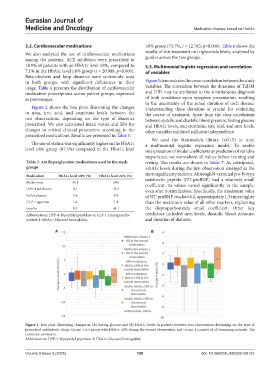
            Figure 1. Box plots illustrating changes in (A) fasting glucose and (B) HbA1c levels in patients between two observations depending on the type of
            prescribed antidiabetic drugs. Group 1 is a group with HbA1c ≤8% during the second observation, and Group 2 consists of all remaining patients. The
            colors are consistent.
            Abbreviations: DPP-4: Dipeptidyl peptidase-4; HbA1c: Glycated hemoglobin.


            Volume 9 Issue 3 (2025)                        189                         doi: 10.36922/EJMO025160133

