


Page 200 - EJMO-9-3
P. 200
Eurasian Journal of
            Medicine and Oncology                                                  Medication therapy based on HbA1c


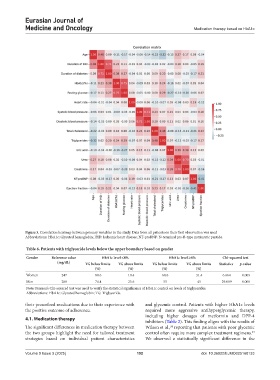
            Figure 3. Correlation heatmap between primary variables in the study. Data from all patients on their first observation was used
            Abbreviations: HbA1c: Glycated hemoglobin; IHD: Ischemic heart disease; NT-proBNP: N-terminal pro-B-type natriuretic peptide.

            Table 6. Patients with triglyceride levels below the upper boundary based on gender

            Gender     Reference value      HbA1c level ≤8%              HbA1c level ≥8%        Chi‑squared test
                         (mg/dL)     TG below limits   TG above limits   TG below limits   TG above limits   Statistics  p‑value
                                         (%)           (%)            (%)           (%)
            Women          247           80.6           19.4          68.6          31.4        6.664   0.009
            Men            288           74.4           25.6           55            45        29.009   0.000
            Note: Pearson’s Chi-squared test was used to verify the statistical significance of HbA1c control on levels of triglycerides.
            Abbreviations: HbA1c: Glycated hemoglobin; TG: Triglyceride.

            their prescribed medications due to their experience with   and glycemic control. Patients with higher HbA1c levels
            the positive outcome of adherence.                 required more aggressive antihyperglycemic therapy,
                                                               including higher dosages of metformin and DPP-4
            4.1. Medication therapy
                                                               inhibitors (Table 2). This finding aligns with the results of
            The significant differences in medication therapy between   Wilson et al.,  reporting that patients with poor glycemic
                                                                         24
            the two groups highlight the need for tailored treatment   control often require more complex treatment regimens.
                                                                                                            24
            strategies based on individual patient characteristics   We observed a statistically significant difference in the

            Volume 9 Issue 3 (2025)                        192                         doi: 10.36922/EJMO025160133

