


Page 201 - EJMO-9-3
P. 201
Eurasian Journal of
            Medicine and Oncology                                                  Medication therapy based on HbA1c


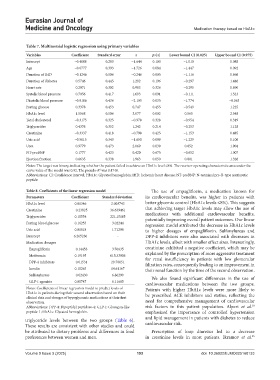
            Table 7. Multinomial logistic regression using primary variables
            Variables          Coefficient  Standard error  z     p>|z|  Lower bound CI (0.025)  Upper bound CI (0.975)
            Intercept            −0.4608      0.280      −1.644   0.100        −1.010              0.088
            Age                  −0.6777      0.393      −1.726   0.084        −1.447              0.092
            Duration of IHD      −0.1246      0.506      −0.246   0.805        −1.116              0.866
            Duration of diabetes  0.5746      0.445      1.292    0.196        −0.297              1.446
            Heart rate           0.2971       0.302      0.983    0.326        −0.295              0.890
            Systolic blood pressure  0.7056   0.417      1.693    0.091        −0.111              1.523
            Diastolic blood pressure  −0.9186  0.436     −2.105   0.035        −1.774             −0.063
            Fasting glucose      0.3378       0.453      0.747    0.455        −0.549              1.225
            HbA1c level          1.5568       0.506      3.077    0.002         0.565              2.548
            Total cholesterol    −0.3175      0.325      −0.978   0.328        −0.954              0.319
            Triglycerides        0.4376       0.352      1.242    0.214        −0.253              1.128
            Creatinine           −0.3337      0.418      −0.798   0.425        −1.153              0.485
            Uric acid            −0.5615      0.340      −1.650   0.099        −1.229              0.106
            Urea                 0.9779       0.473      2.069    0.039         0.052              1.904
            NT-proBNP            0.1777       0.423      0.420    0.675        −0.652              1.007
            Ejection fraction    0.6635       0.338      1.963    0.050         0.001              1.326
            Notes: The target was binary, indicating whether the patient failed to achieve an HbA1c level ≤8%. The receiver operating characteristic area under the
                                           2
            curve value of the model was 0.92. The pseudo-R  was 0.4748.
            Abbreviations: CI: Confidence interval; HbA1c: Glycated hemoglobin; IHD: Ischemic heart disease; NT-proBNP: N-terminal pro-B-type natriuretic
            peptide.
            Table 8. Coefficients of the linear regression model  The use of empagliflozin, a medication known for
            Parameters         Coefficient   Standard deviation   its cardiovascular benefits, was higher in patients with
            HbA1c level          0.81346        2.003743       better glycemic control (HbA1c levels ≤8%). This suggests
            Creatinine          −0.23825        36.639461      that achieving target HbA1c levels may allow the use of
            Triglycerides        0.10554        221.15185      medications with additional cardiovascular benefits,
                                                               potentially improving overall patient outcomes. Our linear
            Fasting blood glucose  0.16253       3.02244       regression model attributed the decrease in HbA1c levels
            Uric acid            0.01018         1.71296       to higher dosages of empagliflozin. Sulfonylureas and
            Intercept           6.265236           -           DPP-4 inhibitors were also associated with decreases in
            Medication dosages                                 HbA1c levels, albeit with smaller effect sizes. Interestingly,
             Empagliflozin      −0.14453         3.76635       creatinine exhibited a negative coefficient, which may be
             Metformin           0.19195        615.33906      explained by the prescription of more aggressive treatment
                                                               for renal insufficiency in patients with low glomerular
             DPP-4 inhibitors   −0.01531        29.76051       filtration rates, consequently leading to an improvement in
             Insulin             0.10263        14.61167       their renal function by the time of the second observation.
             Sulfonylureas      −0.02430         6.86299         We also found significant differences in the use of
             GLP-1 agonists      0.00747         0.11685       cardiovascular  medications  between  the  two  groups.
            Notes: Coefficients of linear regression model to predict levels of   Patients with higher HbA1c levels were more likely to
            HbA1c in patients during their second observation based on their   be prescribed ACE inhibitors and statins, reflecting the
            clinical data and dosages of hypoglycemic medications at their first
            observation.                                       need  for  comprehensive  management  of  cardiovascular
                                                                                                            10
            Abbreviations: DPP-4: Dipeptidyl peptidase-4; GLP-1: Glucagon-like   risk factors in this patient population. Alpert  et al.
            peptide-1; HbA1c: Glycated hemoglobin.             emphasized the importance of controlled hypertension
            triglyceride levels between the two groups (Table 6).   and lipid management in patients with diabetes to reduce
            These results are consistent with other studies and could   cardiovascular risk.
            be attributed to dietary problems and differences in food   Prescription of loop diuretics led to a decrease
            preferences between women and men.                 in creatinine levels  in most patients. Ikramov  et al.
                                                                                                            25

            Volume 9 Issue 3 (2025)                        193                         doi: 10.36922/EJMO025160133

