


Page 23 - ESAM-1-1
P. 23
Engineering Science in
            Additive Manufacturing                                        ML in MAM monitoring and control through images


            consistent part quality. Factors such as appropriate powder   Table 4. Summary of process control in MAM
            layer thickness, particle size distribution, and powder
            diffusion technology play a crucial role in optimizing melt   Control algorithms  LPBF     DED
            pool behavior and minimizing defects.              PID                      168           169-171
                                                               Sliding mode control   172,173          174
              Cruz  et al.  utilized an artificial neural network
                        161
            (ANN)-based logic controller to adjust welding speed   Predictive control  175-178       22,179,180
            in WAAM, ensuring the desired bead width and high   Adaptive control      181,182        158,183,184
            printed sample quality. Kershaw  et al.  developed an   Rule-based        185,186         160,187
                                            162
            ML framework for controlling bead width by adjusting   Abbreviations: DED: Direct energy deposition; LPBF: Laser powder
            welding speed. Zhang et al.  proposed a robust control   bed fusion; MAM: Metal additive manufacturing; PID: Proportional
                                  163
            system driven by ML to regulate deposition height through   integral derivative.
            adjustments in arc current, travel speed, and external
            wire feed speed. Tang et al.  implemented a topography   5. Challenges and prospects
                                  164
            control strategy using a deep-image method to adaptively   5.1. Challenges
            address  surface  topography  quality,  handling  concave
            and convex parts during the WAAM process. To address   By analyzing the image data with ML algorithms, researchers
            accumulation errors during printing, Dharmawan et al.    can monitor the formation and solidification process of the
                                                         165
            suggested a framework for iteratively learning the effects of   melt pool in real time and identify potential defects such
            process parameters on printing and correcting inter-layer   as porosity, cracks, or unevenness. ML technology can
            geometric deviations based on RL, ensuring satisfactory   help predict the occurrence of these defects and adjust the
            final output. Notably, Mireles  et al.  developed an   process parameters in advance to avoid the occurrence of
                                            166
            ML-driven automatic feedback control system to manage   defects. The quality and stability of the MAM process can
            powder bed temperature variations in EBM through   be improved through real-time feedback and automatic
            modifications in processing parameters.            control. Still, several challenges remain in the integration
                                                               of ML, limiting the efficiency of the overall process.
            4.3. Others
            In MAM, besides controlling the melt pool and deposited   5.1.1. Multi-source data fusion
            layers,  several  other  crucial  control aspects  demand   Due to the complex non-linearity, robust coupling, and
            consideration. For example, Imani  et al.  presented an   multi-parameter properties of MAM, many factors
                                             167
            ML-based technique that successfully described surface   have a complex effect on faults in as-built components.
            finishes for ultraprecision machining quality control and   Unfortunately, existing systems often restrict themselves
            created a model that connected process parameters with   to monitoring individual feature signals, leading to
            fractal features of in-process photos. This linkage enables   unreliable detection results. Overcoming this limitation
            swift responses to process changes, subsequently reducing   necessitates the implementation of advanced multi-sensor
            the number of defective products. Moreover, atmosphere   synchronous sensing techniques to seamlessly integrate
            control plays a key role. Maintaining an appropriate   data from diverse sources, enhancing the reliability of
            printing environment atmosphere is essential for reducing   defect  detection results.  Nevertheless, the  complex
                                                                                   6,30
            oxidation and pollution, enhancing printing quality, and   interplay of various signals requires careful clarification, as
            minimizing defects.                                mutual interference gives rise to numerous uncertainties
              In summary, process control in MAM is essential   and noise within the captured images.
            for  maintaining quality,  consistency,  and efficiency  in   5.1.2. Limited amount of data
            the production process. By monitoring and adjusting
            parameters such as material quality, process settings,   The scarcity of data can significantly impact the efficacy
            temperature, and melt pool behavior, manufactured   and performance of these models, impeding their ability
            components with improved qualities can be achieved. Key   to generalize, optimize process parameters, and accurately
            aspects of control include melt pool control to manage melt   identify crucial information within images. To begin with,
            pool  geometry and temperature,  deposited layer control   a constrained dataset can impede the model’s capacity
            to  ensure  the  quality  and  accuracy  of  each  layer,  and   to generalize, potentially resulting in overfitting of the
            atmosphere control to sustain appropriate environmental   training  data  and consequently  producing  failed  results
            conditions and minimize oxidation and contamination.   in  practical  applications.  Moreover,  feature  extraction
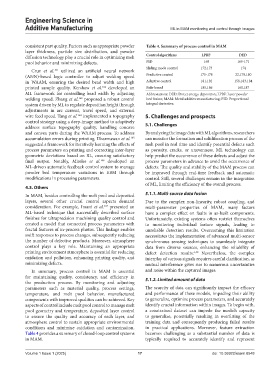
            Table 4 provides a summary of closed-loop control systems   becomes challenging as a substantial number of data is
            in MAM.                                            typically required to accurately identify and represent


            Volume 1 Issue 1 (2025)                         17                             doi: 10.36922/esam.8548

