


Page 20 - ESAM-1-1
P. 20
Engineering Science in
            Additive Manufacturing                                        ML in MAM monitoring and control through images


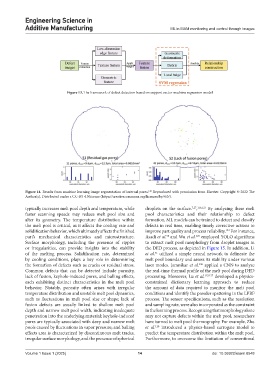
                              Figure 13. The framework of defect detection based on support vector machine regression model


            Figure 14. Results from machine learning image segmentation of internal pores.  Reproduced with permission from Elsevier. Copyright © 2022 The
                                                                118
            Author(s). Distributed under a CC-BY 4.0 license (https://creativecommons.org/licenses/by/4.0/).
            typically increases melt pool depth and temperature, while   droplets on the surface. ,   By analyzing these melt
                                                                                   7,27 116,123
            faster scanning speeds may reduce melt pool size and   pool characteristics and their relationship to defect
            alter its geometry. The temperature distribution within   formation, ML models can be trained to detect and classify
            the melt pool is critical, as it affects the cooling rate and   defects in real time, enabling timely corrective actions to
            solidification behavior, which ultimately affects the finished   improve part quality and process reliability.  For instance,
                                                                                                 124
                                                                        50
                                                                                    125
            part’s mechanical characteristics and microstructure.   Asadi et al.  and Wu et al.  employed YOLO algorithms
            Surface  morphology, including the presence  of ripples   to extract melt pool morphology from droplet images in
            or irregularities, can provide insights into the stability   the DED process, as depicted in Figure 15. In addition, Li
                                                                   51
            of  the melting process. Solidification  rate, determined   et al.  utilized a simple neural network to delineate the
            by cooling conditions, plays a key role in determining   melt pool boundary and assess its stability under various
            the formation of defects such as cracks or residual stress.   laser modes. Jamnikar et al.  applied a CNN to analyze
                                                                                      126
            Common defects that can be detected include porosity,   the real-time thermal profile of the melt pool during DED
            lack of fusion, keyhole-induced pores, and balling effects,   processing. Moreover, Lu et al. 113,127  developed a physics-
            each  exhibiting  distinct  characteristics  in  the  melt  pool   constrained dictionary learning approach to reduce
            behavior. Notably, porosity often arises with irregular   the amount of data required to monitor the melt pool
            temperature distribution and unstable melt pool dynamics,   conditions and identify the powder spattering in the LPBF
            such as fluctuations in melt pool size or shape; lack of   process. The sensor specifications, such as the resolution
            fusion defects are usually linked to shallow melt pool   and sampling rate, were also incorporated as the constraint
            depth and narrow melt pool width, indicating inadequate   in the learning process. Recognizing that morphology alone
            penetration into the underlying material; keyhole-induced   may not capture defects within the melt pool, researchers
            pores are typically associated with deep and narrow melt   have turned to melt pool thermography. For example, Zhu
            pools caused by fluctuations in vapor pressure; and balling   et al.  introduced a physics-based surrogate model to
                                                                   128
            effects area is characterized by discontinuous melt tracks,   predict the temperature distribution within the melt pool.
            irregular surface morphology, and the presence of spherical   Furthermore, to overcome the limitation of conventional


            Volume 1 Issue 1 (2025)                         14                             doi: 10.36922/esam.8548

