


Page 17 - ESAM-1-1
P. 17
Engineering Science in
            Additive Manufacturing                                        ML in MAM monitoring and control through images


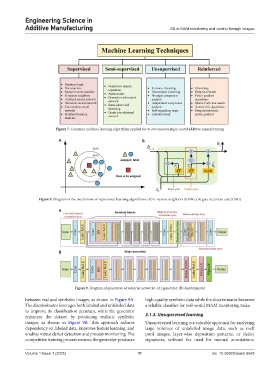
                         Figure 7. Common machine learning algorithms applied for in situ monitoring in metal additive manufacturing

                          A                                  B


                 Figure 8. Diagram of the mechanism of supervised learning algorithms: (A) k-nearest neighbors (KNN); (B) gate recurrent unit (GRU)

                          A


                          B


                                 Figure 9. Diagram of generative adversarial networks: (A) generator; (B) discriminator

            between real and synthetic images, as shown in Figure 9A.   high-quality synthetic data while the discriminator becomes
            The discriminator leverages both labeled and unlabeled data   a reliable classifier for real-world MAM monitoring tasks.
            to improve its classification accuracy, while the generator
            enhances the dataset by producing realistic synthetic   3.1.3. Unsupervised learning
            images, as shown in  Figure  9B. This approach reduces   Unsupervised learning is a valuable approach for analyzing
            dependency on labeled data, improves feature learning, and   large volumes of unlabeled image data, such as melt
            enables robust defect detection and process monitoring. The   pool images, layer-wise deposition patterns, or defect
            competitive training process ensures the generator produces   signatures, without the need for manual annotations.


            Volume 1 Issue 1 (2025)                         11                             doi: 10.36922/esam.8548

