


Page 16 - ESAM-1-1
P. 16
Engineering Science in
            Additive Manufacturing                                        ML in MAM monitoring and control through images


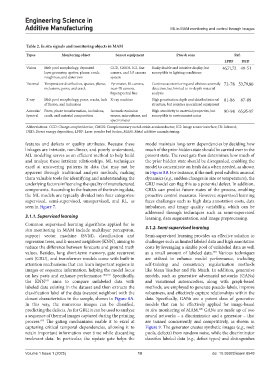
            Table 2. In situ signals and monitoring objects in MAM
            Types          Monitoring object      Sensor equipment          Pros & cons              Ref.
                                                                                                 LPBF   DED
            Vision  Melt pool morphology, deposited   CCD, CMOS, ICI, line   Easily doable and intuitive display, but   46,71,72 49-51
                    layer geometry, spatter, plume, crack,   camera, and 3D camera   susceptible to lighting conditions
                    roughness, and distortion   system
            Thermal  Temperature distribution, spatter, plume,  Pyrometer, IR camera,   Continuous monitoring and obvious anomaly  72-78 53,79,80
                    inclusions, pores, and crack  near-IR camera,   detection, but limited to in-depth material
                                                hyperspectral line  analysis
            X-ray   Melt pool morphology, pores, cracks, lack  X-ray machine  High penetration depth and detailed internal  81-86  87-89
                    of fusion, and inclusions                     structure, but requires specialized equipment
            Acoustic/  Pores, phase transformation, inclusions,   Acoustic emission   High sensitivity to material properties, but   90-94 65,95-97
            Spectral  crack, and material composition  sensor, microphone, and  susceptible to environment noise
                                                spectrometer
            Abbreviations: CCD: Charge-coupled device; CMOS: Complementary metal-oxide-semiconductor; ICI: Image sensor interface; IR: Infrared;
            DED: Direct energy deposition; LPBF: Laser powder bed fusion; MAM: Metal additive manufacturing.

            features and defects or quality attributes. Because these   model maintain long-term dependencies by deciding how
            linkages are intricate, non-linear, and poorly understood,   much of the prior hidden state should be carried over to the
            ML modeling serves as an efficient method to help build   present state. The reset gate then determines how much of
            and analyze these intricate relationships. ML techniques   the prior hidden state should be disregarded, enabling the
            excel  at uncovering  patterns in data  that may not be   model to concentrate on fresh data when needed, as shown
            apparent  through  traditional  analysis  methods,  making   in Figure 8B. For instance, if the melt pool exhibits unusual
            them valuable tools for identifying and understanding the   dynamics (e.g., sudden changes in size or temperature), the
            underlying factors influencing the quality of manufactured   GRU model can flag this as a potential defect. In addition,
            components. According to the features of the training data,   GRUs  can predict  future  states  of the  process, enabling
            the ML models are typically divided into four categories:   proactive control measures. However, supervised learning
            supervised, semi-supervised, unsupervised, and RL, as   faces challenges such as high data annotation costs, data
            seen in Figure 7.                                  imbalance, and image quality variability, which can be
                                                               addressed through techniques such as semi-supervised
            3.1.1. Supervised learning                         learning, data augmentation, and image preprocessing.
            Common  supervised learning algorithms  applied for  in
            situ  monitoring  in MAM  include  multilayer  perceptron,   3.1.2. Semi-supervised learning
            support vector machine (SVM), classification and   Semi-supervised learning provides an effective solution to
            regression trees, and k-nearest neighbors (KNN), aiming to   challenges such as limited labeled data and high annotation
            reduce the difference between forecasts and ground truth   costs by leveraging a sizable pool of unlabeled data as well
            values. Besides, long short-term memory, gate recurrent   as a small amount of labeled data.  Various techniques
                                                                                           104
            unit (GRU), and transformer models come with built-in   are utilized to enhance model performance, including
            attention mechanisms that can learn important regions in   self-training and consistency regularization methods
            images or sequence information, helping the model focus   like Mean Teacher and Fix Match. In addition, generative
            on key parts and enhance performance. 100,101  Specifically,   models, such as generative adversarial networks (GANs)
            the KNN  aims to compare unlabeled data with       and  variational  autoencoders,  along  with  graph-based
                    102
            labeled data existing in the dataset and then extracts the   methods, are employed to generate pseudo-labels, improve
            classification label of the data (nearest neighbor) with the   robustness, and effectively capture relationships within the
            closest characteristics in the sample, shown in Figure 8A.   data. Specifically, GANs are a potent class of generative
            In this way, the numerous images can be classified,   models that can be effectively applied for image-based
            predicting the defects. As for GRU, it can be used to analyze   in situ monitoring of MAM.  GANs are made up of two
                                                                                      105
            a sequence of thermal images captured during the printing   neural networks – a discriminator and a generator – that
            process.  The gating mechanisms enable it to excel at   are trained concurrently and competitively, as shown in
                  103
            capturing critical temporal dependencies, allowing it to   Figure 9. The generator creates synthetic images (e.g., melt
            retain important information over time while discarding   pools, defects) from random noise, while the discriminator
            irrelevant data. In particular, the update gate helps the   classifies labeled data (e.g., defect types) and distinguishes


            Volume 1 Issue 1 (2025)                         10                             doi: 10.36922/esam.8548

