


Page 73 - ESAM-1-1
P. 73
Engineering Science in
            Additive Manufacturing                                                       ML in additive manufacturing


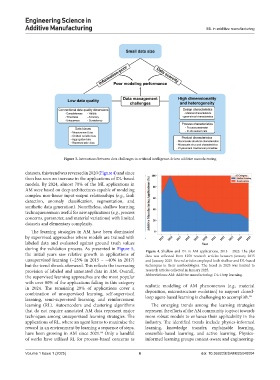
                            Figure 3. Interactions between data challenges in artificial intelligence-driven additive manufacturing

            datasets, this trend was reversed in 2020 (Figure 4) and since
            then has seen an increase in the applications of DL-based
            models.  By  2024,  almost  70%  of  the  ML  applications  in
            AM were based on deep architectures capable of modeling
            complex non-linear input-output relationships (e.g., fault
            detection, anomaly classification, segmentation, and
            synthetic data generation). Nonetheless, shallow learning
            techniques remain useful for new applications (e.g., process
            concerns, parameter, and material variations) with limited
            datasets and elementary complexity.
              The learning strategies in AM have been dominated
            by supervised approaches where models are trained with
            labeled data and evaluated against ground truth values
            during the validation process. As presented in  Figure  5,   Figure 4. Shallow and DL in AM applications, 2015 – 2025. The plot
            the initial years saw relative growth in applications of   data was collected from 1250 research articles between January 2015
            unsupervised  learning  (~25%  in  2015  – ~40%  in  2017)   and January 2025. Several articles employed both shallow and DL-based
            but the trend shrank afterward. This reflects the increasing   techniques in their methodologies. The trend in 2025 was limited to
            provision of labeled and annotated data in AM. Overall,   research articles collected in January 2025.
            the supervised learning approaches are the most popular   Abbreviations: AM: Additive manufacturing; DL: Deep learning.
            with over 80% of the applications falling in this category
            in 2024. The remaining 20% of applications cover a   realistic modeling of  AM  phenomenon (e.g.,  material
            combination of unsupervised learning, self-supervised   deposition, microstructure evolution) to support closed-
                                                                                                           65
            learning, semi-supervised learning, and reinforcement   loop agent-based learning is challenging to accomplish.
            learning (RL). Autoencoders and clustering algorithms   The  emerging  trends  among the  learning  strategies
            that do not require annotated AM data represent major   represent the efforts of the AM community to pivot towards
            techniques among unsupervised learning strategies. The   more robust models to enhance their applicability in the
            applications of RL, where an agent learns to maximize the   industry. The identified trends include physics-informed
            reward in an environment by learning a sequence of steps,   learning, knowledge transfer, explainable learning,
            have been growing in AM since 2021.  Only a handful   ensemble-based  learning,  and  active  learning.  Physics-
                                            64
            of works have utilized RL for process-based concerns as   informed learning groups context-aware and engineering-

            Volume 1 Issue 1 (2025)                         6                          doi: 10.36922/ESAM025040004

