


Page 76 - ESAM-1-1
P. 76
Engineering Science in
            Additive Manufacturing                                                       ML in additive manufacturing


            Table 2. An overview of the advanced approaches in AI‑driven AM
            Advanced approach                  Description                     Target data challenge  Example
                                                                                                    publications
            Data integration  Combining datasets from multiple data sources   Small data size and high heterogeneity  49,73,88
            Knowledge transfer  Transferring knowledge between data sources.  Small data size and high heterogeneity  89-92
            Feature engineering  Reducing dimensionality and extracting representative features  High dimensionality and heterogeneity  49,55
            Adaptive sampling  Iteratively sampling additional data to improve data   Small data size and low data quality  93,94
                              representativeness
            Data augmentation   Oversampling underrepresented groups and/or downsampling   Small data size and low data quality  95-102
                              overrepresented groups
            Self-supervised learning  Learning representations from unlabeled datasets based on pseudo  Small (labeled) data size  97
                              labels or pretext tasks
            Semi-supervised learning Learning representations from both labeled and unlabeled datasets Small (labeled) data size  103
            Federated learning  A decentralized learning approach that trains a model using   Small data size and high heterogeneity  104,105
                              multiple data sources while ensuring data privacy
            Physics-informed ML   Embedding material physics, domain understanding, context   Small data size  106-114
                              awareness, and engineering knowledge into ML
            Note: The example publications are not exhaustive.
            Abbreviation: ML: Machine learning.

                                                               integrating knowledge across sources, scales, and processes.
                                                               Table 2 provides an overview of the advanced approaches
                                                               discussed in this section and indicates the data challenges
                                                               that each approach tackles.
                                                               5.1. Data integration
                                                               Data integration in AI-driven AM combines datasets from
                                                               multiple sources across different materials, geometries,
                                                               process  parameters,  sensors,  modalities,  and  prediction
                                                               tasks. Although data integration increases the total
                                                               amount of information, special data handling and model
                                                               architecture are  required  to bridge format  discrepancies
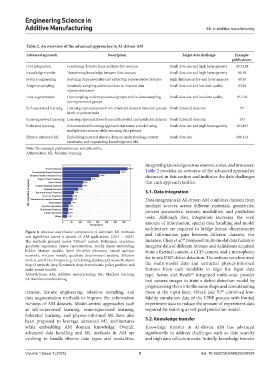
            Figure 8. Absolute and relative composition of dominant ML methods
            and algorithms across a decade of AM applications (2015 – 2025).   and information gaps between  different  datasets.  For
                                                                               49
            The methods grouped under “Others” include Boltzmann machines,   instance, Chen et al.  proposed multi-modal data fusion to
            quadratic regression, sparse representation, locally linear embedding,   integrate data of different formats and definitions acquired
            hidden Markov models, latent Dirichlet allocation, neural operator   from a thermal camera, a CCD camera, and a microphone
            networks, mixture models, quadratic discriminant analysis, diffusion   for in situ DED defect detection. The authors synchronized
            models, and RL techniques (e.g., Q-learning, dual deep Q network, classic
            deep Q network, deep Q network, deep deterministic policy gradient, and   the  multi-modal  data  and  extracted  physics-informed
            multi-armed bandit).                               features from each modality to align the input data
            Abbreviations: AM: Additive manufacturing; ML: Machine learning;   type. Scime and Beuth  integrated multi-scale powder
                                                                                  73
            RL: Reinforcement learning.                        bed camera images to train a defect detection model by
                                                               preprocessing them into the same shape and concatenating
            transfer, feature engineering, adaptive sampling, and   them at the input layer. Olleak and Xi  combined low-
                                                                                               88
            data augmentation methods to improve the information   fidelity simulation data of the LPBF process with limited
            richness of AM datasets. Model-centric approaches such   experiment data to reduce the amount of experiment data
            as self-supervised learning, semi-supervised learning,   required for training a melt pool prediction model.
            federated learning, and physics-informed ML have also
            been proposed to leverage advanced ML architectures   5.2. Knowledge transfer
            while embedding AM domain knowledge. Overall,      Knowledge transfer in AI-driven AM has advanced
            advanced data handling and ML methods in AM are    significantly to address challenges such as data scarcity
            evolving to handle diverse data types and modalities,   and high data collection costs. Initially, knowledge transfer


            Volume 1 Issue 1 (2025)                         9                          doi: 10.36922/ESAM025040004

