


Page 71 - ESAM-1-1
P. 71
Engineering Science in
            Additive Manufacturing                                                       ML in additive manufacturing


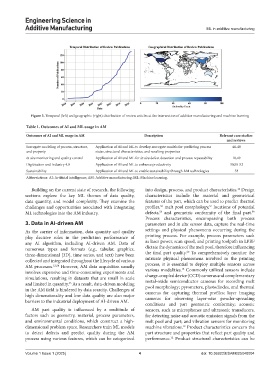
              Figure 2. Temporal (left) and geographic (right) distribution of review articles at the intersection of additive manufacturing and machine learning

            Table 1. Outcomes of AI and ML usage in AM
            Outcomes of AI and ML usage in AM                 Description                     Relevant case studies
                                                                                                 and reviews
            Surrogate modeling of process, structure,   Application of AI and ML to develop surrogate models for predicting process   46-48
            and property                  states, structural characteristics, and resulting properties
            In situ monitoring and quality control  Application of AI and ML for in situ defect detection and process repeatability  18,49
            Digitization and Industry 4.0  Application of AI and ML to enhance productivity        30,50-52
            Sustainability                Application of AI and ML to enable sustainability through AM technologies  53
            Abbreviations: AI: Artificial intelligence; AM: Additive manufacturing; ML: Machine learning.


                                                                                                      12
              Building on the current state of research, the following   into design, process, and product characteristics.  Design
            sections explore the key ML themes of data quality,   characteristics include the material and geometrical
            data quantity, and model complexity. They examine the   features of the part, which can be used to predict thermal
                                                                                          57
                                                                     56
            challenges and opportunities associated with integrating   profiles,  melt pool morphology,  locations of potential
                                                                                                            59
                                                                     58
            ML technologies into the AM industry.              defects,  and geometric  conformity  of the  final part.
                                                               Process characteristics, encompassing both process
            3. Data in AI-driven AM                            parameters and in situ sensor data, capture the real-time
            As the carrier of information, data quantity and quality   settings and physical phenomena occurring during the
            play decisive roles in the prediction performance of   printing process. For example, process parameters such
            any AI algorithm, including AI-driven AM. Data of   as laser power, scan speed, and printing toolpath in LPBF
            numerous types and formats (e.g., tabular, graphics,   dictate the dynamics of the melt pool, therefore influencing
                                                                                60
            three-dimensional [3D], time series, and text) have been   the final part quality.  To comprehensively monitor the
            collected and integrated throughout the lifecycle of various   intricate physical phenomena involved in the printing
            AM processes. 12,54  However, AM data acquisition usually   process, it is essential to deploy multiple sensors across
                                                                              18
            involves expensive and time-consuming experiments and   various modalities.  Commonly utilized sensors include
            simulations, resulting in datasets that are small in scale   charge-coupled device (CCD) cameras and complementary
            and limited in quantity.  As a result, data-driven modeling   metal-oxide semiconductor cameras for recording melt
                              55
                                                               pool morphology; pyrometers, photodiodes, and thermal
            in the AM field is hindered by data scarcity. Challenges of   cameras for capturing thermal profiles; layer imaging
            high dimensionality and low data quality are also major
            barriers to the industrial deployment of AI-driven AM.  cameras  for observing layer-wise powder-spreading
                                                               conditions and part geometric conformity; acoustic
              AM part quality is influenced by a multitude of   sensors, such as microphones and ultrasonic transducers,
            factors such as geometry, material, process parameters,   for detecting noise and acoustic emission signals from the
            and environmental conditions, which construct a high-  melt pool and part; and vibration sensors for monitoring
            dimensional problem space. Researchers train ML models   machine vibrations.  Product characteristics concern the
                                                                               12
            to  detect  defects  and  predict  quality during  the  AM   part structure and properties that reflect part quality and
            process using various features, which can be categorized   performance.  Product structural characteristics can be
                                                                          12

            Volume 1 Issue 1 (2025)                         4                          doi: 10.36922/ESAM025040004

