


Page 74 - ESAM-1-1
P. 74
Engineering Science in
            Additive Manufacturing                                                       ML in additive manufacturing


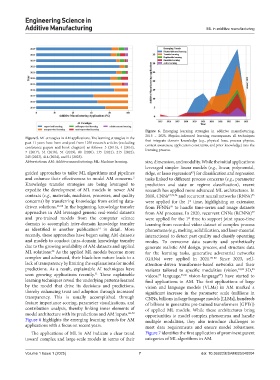
                                                               Figure  6.  Emerging  learning  strategies  in  additive  manufacturing,
                                                               2015  –  2025.  Physics-informed  learning  encompasses  all  techniques
            Figure 5. ML strategies in AM applications. The learning strategies in the   that integrate domain knowledge (e.g., physical laws, process physics,
            past 11 years have been analyzed from 1250 research articles (excluding   context awareness, application constraints, and prior knowledge) into the
            conference  papers  and book  chapters)  as  follows: 3  (2015),  4  (2016),   learning process.
            7  (2017), 34  (2018), 54  (2019), 88  (2020), 135  (2021), 215  (2022),
            245 (2023), 414 (2024), and 51 (2025).
            Abbreviations: AM: Additive manufacturing; ML: Machine learning.  size, dimension, and modality. While the initial applications
                                                               leveraged simpler linear models (e.g., linear, polynomial,
            guided approaches to tailor ML algorithms and pipelines   ridge, or lasso regression ) for classification and regression
                                                                                  47
            and enhance their effectiveness to model AM concerns.    tasks linked to different process concerns (e.g., parameter
                                                          5
            Knowledge transfer strategies are being leveraged to   prediction and state or regime classification), recent
            expedite the development of ML models in newer AM   research has applied more advanced ML architectures. In
            contexts (e.g., materials, machines, processes, and quality   2018, CNNs 17,73,74  and recurrent neural networks (RNNs)
                                                                                                            75
            concerns) by transferring knowledge from existing data-  were applied for the 1   time, highlighting an extension
                                                                                  st
            driven solutions. 66-68  In the beginning, knowledge transfer   from FFNNs  to handle time-series and image datasets
                                                                         76
            approaches in AM leveraged generic real-world datasets   from AM processes. In 2020, recurrent CNNs (RCNNs)
                                                                                                            77
            and pre-trained  models  from  the computer  science   were applied for the 1  time to support joint space-time
                                                                                 st
            domain to accomplish inter-domain knowledge transfer   learning from recorded video dataset of complex process
            as identified in another publication  in detail. More   phenomena (e.g., melting, solidification, and laser-material
                                           14
            recently, these approaches have begun using AM datasets   interactions) to detect part quality and classify operating
            and models to conduct intra-domain knowledge transfer   modes. To overcome data scarcity and synthetically
            due to the growing availability of AM datasets and applied   generate realistic AM design, process, and structure data
            ML solutions.  As the applied ML models become more   for the learning tasks, generative adversarial networks
                       66
            complex and advanced, their black-box nature leads to a   (GANs)  were  applied  in  2021. 78-80   Since  2023,  self-
            lack of transparency by limiting the explanations for model   attention-driven transformer-based  networks and  their
            predictions. As a result, explainable AI techniques have   variants tailored to specific modalities (vision, 81,82  3D,
                                                                                                            83
            seen  growing applications  recently.   These  explainable   videos,   language, 85,86   vision-language )  have started to
                                         31
                                                                                              87
                                                                    84
            learning techniques reveal the underlying patterns learned   find  applications  in  AM.  The  first applications  of  large
            by  the  model  that drive its  decisions  and predictions,   vision and language models (VLMs) in AM marked a
            thereby enhancing trust and adoption through increased   significant  increase  in  the  parameter  scale  (millions  in
            transparency. This is usually accomplished through   CNNs, billions in large language models [LLMs], hundreds
            feature importance scoring, parameter visualizations, and   of billions in generative pre-trained transformers [GPTs])
            contribution analysis,  thereby  linking  inner  elements  of   of applied ML models. While these architectures bring
            model architecture with its predictions and AM inputs. 69-72    opportunities to model complex phenomena and handle
            Figure 6 highlights the emerging learning trends for AM   multiple modalities, they also introduce challenges to
            applications with a focus on recent years.         meet data requirements and ensure model robustness.
              The applications of ML in AM indicate a clear trend   Figure 7 identifies the first application of prominent parent
            toward complex and large-scale models in terms of their   categories of ML algorithms in AM.


            Volume 1 Issue 1 (2025)                         7                          doi: 10.36922/ESAM025040004

