


Page 10 - ESAM-1-4
P. 10
Engineering Science in
            Additive Manufacturing                                                       Experimental statistics in AM


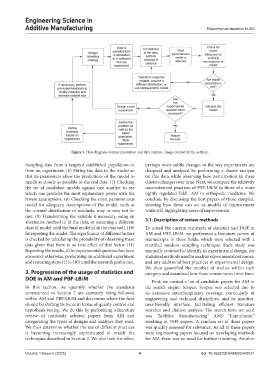
                               Figure 1. Flow diagram of experimentation and data analysis. Image created by the authors.

            Sampling  data  from  a  targeted  established  population  or   perhaps more subtle changes in the way experiments are
            from an experiment. (6) Fitting the data to the model so   designed and analyzed by performing a cluster analysis
            that its parameters allow the predictions of the model to   on this data while observing how participation in these
            match as closely as possible to the real data. (7) Checking   clusters changes over time. Next, we compare the relatively
            the set of candidate models against one another to see   unconstrained practices of PBF-LB/M to those of a more
            which one provides the most explanatory power with the   tightly regulated field—AM in orthopedic medicine. We
            fewest assumptions. (8) Checking the most parsimonious   conclude by discussing the best papers of those sampled,
            model for adequacy. Assumptions of the model, such as   showing  how  these  can  act  as models of  improvement
            the normal distribution of residuals, may or may not be   while still highlighting areas of improvement.
            met. (9) Transforming the variable if necessary, using an
            alternative method to fit the data, or assuming a different   3.1. Description of review methods
            class of model until the final model(s) fit the data well. (10)   To unveil the current standards of statistics and DOE in
            Interpreting the model. The significance of different factors   AM and PBF-LB/M, we performed a literature survey of
            is checked by calculating the probability of observing these   manuscripts in these fields, which were selected with a
            data given that there is no true effect of that factor. (11)   stratified random sampling technique. Each study was
            Reporting the results, if the experimental question has been   manually reviewed to identify its experimental design, the
            answered; otherwise, performing an additional experiment   statistical methods used to analyze experimental outcomes,
            and repeating steps (4) to (10) until the research goal is met.  and any additional best practices in experimental design.
                                                               We then quantified the number of studies within each
            3. Progression of the usage of statistics and      category and examined how these counts varied over time.
            DOE in AM and PBF-LB/M
                                                                 First, we created a list of candidate papers for AM in
            In this section, we quantify whether the standards   the search engine Scopus. Scopus was selected due to
            summarized in Section 2 are currently being followed   its extensive interdisciplinary coverage, particularly of
            within AM and PBF-LB/M and determine where the field   engineering and technical disciplines, and its intuitive,
            should be shifting its focus in terms of quality control and   user-friendly interface, facilitating efficient literature
            hypothesis testing. We do this by performing a literature   searches and citation analysis. The search term we used
            review  of  randomly  selected  papers  from  AM  and   was “Additive Manufacturing” AND “Experiment,”
            categorizing the types of designs and analyses they used.   resulting in 5549 papers. A  random set of these papers
            We then determine whether the use of different practices   was quickly assessed for relevance. As all of these papers
            is becoming increasingly sophisticated to match the   were engineering papers focused on developing methods
            techniques described in Section 2. We also look for other,   for AM, there was no need for further trimming. Another


            Volume 1 Issue 4 (2025)                         4                          doi: 10.36922/ESAM025340021

