


Page 11 - ESAM-1-4
P. 11
Engineering Science in
            Additive Manufacturing                                                       Experimental statistics in AM


            candidate list of papers was created for PBF using the   from the text alone, the paper was abandoned and replaced
            search terms “Powder Bed Fusion” AND “Experiment” OR   with a new randomly selected paper. If other aspects of the
            “Machine-Learning” AND “Selective Laser Melting” OR   design were not stated (such as whether the experiment
            “Selective Laser Sintering,” and its relevance was checked   was performed in random order), it was assumed that this
            as well. We included a search term for “machine learning”   aspect of the design was absent from the study. If there
            to capture cases where machine learning models were used   were multiple experiments performed, then data would
            to evaluate experimental results instead of or in addition to   only be collected on the first experiment mentioned in the
            traditional linear models.                         text. Figure 2 shows the workflow of the review, and Table 3
              Next, we randomly sampled up to a minimum of 12   gives a brief overview of each of the topics we covered in
            papers from each year from 2016 to 2024 in Scopus for both   the review. Each of these topics is discussed in more depth
                                                                                       26
            AM and PBF-LB/M, increasing the number of samples   in the companion manuscript.
            every year to reflect the acceleration in publication rates   3.2. Summary results of literature review
            in the field (Table 2). We restricted our analysis to papers
            published between 2016 and 2024 because this period   Overall, the data reveal no significant temporal trends in
            captures the rapid expansion of AM research following   the use of design types or analytical methods for either
            the  release  of  key standards,  such  as  ISO/ASTM  52901   AM or PBF-LB/M. However, the two approaches exhibit
            on requirements for purchased AM parts and ISO/ASTM   differences in the specific designs and analyses they
            52915 on standardized AMF file formats, 27,28  ensuring   employ. First, we find the proportion of papers each year
            that temporal trends reflect practices developed under a   that utilize different aspects of DOE and ANOVAs for all
            modernized and increasingly standardized framework.   AM (Figure 3, left panel) and PBF-LB/M (Figure 3, right
            Before 2016, papers on this topic were relatively scarce.   panel). We then find the proportion of papers each year
            Each randomly selected paper was vetted to make sure   that perform different data analysis (Figure  4) and use
            it was an experimental paper (as opposed to a review or   different design types (Figure  5). We then fit a LOESS
                                                                       29
            theoretical paper). If a paper did not meet this requirement,   regression  to each category to measure trends over time.
            it was excluded and replaced with a new random paper   In each case, these regressions tend to either remain flat
            from that year.                                    over time or fluctuate wildly, so no significant trends can
                                                               be  predicted  from  this  analysis.  Finally,  we  categorize
              Each paper was assessed on the type of data analysis,   some designs (full factorial, fractional factorial, Taguchi,
            the type of experimental design, whether blocking was   central composite, and randomly distributed factor levels)
            present, whether the run order was randomized, whether   as being more sophisticated than alternative designs and
            model  adequacy  checks  were  performed,  whether   plot the proportion of this group of designs over time. We
            model selection took place, and whether there was some   then performed a linear regression, which includes this
            justification for the sample size, and finally, the sample   proportion as its response variable, while year and field type
            size itself was recorded. If aspects of the design were not   are predictor variables (Figure 5; linear model: p-values for
            explicitly stated, attempts were made to estimate values   all effects >0.05, p-value for the model = 0.5866, multiple
            such as sample size from figures or attached datasets. If the   R  = 0.1249). Neither their main effects nor interactions are
                                                                2
            sample size, design, or analysis could not be determined
                                                               significant, despite that the fit was adequate (residual plots
                                                               were checked). This means that designs are not becoming
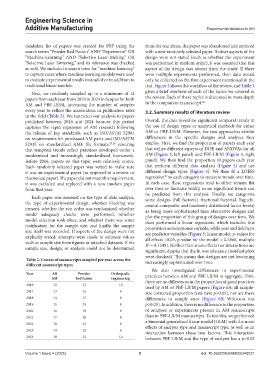
            Table 2. Counts of manuscripts sampled per year across the
            different manuscript types                         increasingly sophisticated over time.
                                                                 We also investigated differences in experimental
            Year       All        Powder        Orthopedic     practices between AM and PBF-LB/M in aggregate. First,
                       AM        bed fusion     engineering
            2016        12          15              10         there are no differences in the proportion of good practices
                                                               used by AM or PBF-LB/M papers (Figure 6A; all sample-
            2017        13          16              0          size corrected proportion tests have p>0.05), nor are there
            2018        14          17              0          differences in sample sizes (Figure  6B; Wilcoxon test
            2019        15          18              0          p>0.05). In addition, there is no difference in the proportion
            2020        16          19              0          of analyses or experiments present in AM manuscripts
            2021        17          20              0          than in PBF-LB/M manuscripts. To test this, we performed
            2022        18          21              0          a binomial generalized linear model (GLM) with the main
                                                               effects of analysis type and manuscript type, as well as an
            2023        19          22              0          interaction between these two factors. This interaction
            2024        18          21              10         between PBF-LB/M and the type of analysis has a p>0.05


            Volume 1 Issue 4 (2025)                         5                          doi: 10.36922/ESAM025340021

