


Page 14 - ESAM-1-4
P. 14
Engineering Science in
            Additive Manufacturing                                                       Experimental statistics in AM


            Figure 5. LOESS regression of the proportion of papers that use different experimental designs (color) for additive manufacturing overall (first panel) and
            PBF-LB/M specifically (second panel). Gray points represent the sum of sophisticated designs (Box-Behnken, fractional factorial, full factorial, central
            composite, Taguchi), while the gray dashed line shows the linear regression between time and these sophisticated designs. Image created by the authors.
            Abbreviations: ANOVA: Analysis of variance; OFAT: One factor at a time; PBF-LB/M: Laser-based powder bed fusion of metals.

                         A


                                                  C                         D
                         B


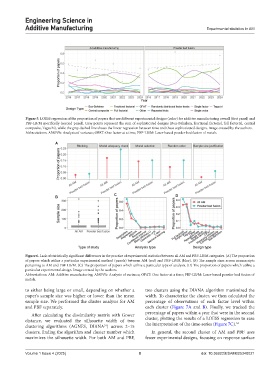
            Figure 6. Lack of statistically significant differences in the practice of experimental statistics between all AM and PBF-LB/M categories. (A) The proportion
            of papers which utilize a particular experimental method (panels) between AM (red) and PBF-LB/M (blue). (B) The sample sizes across manuscripts
            pertaining to AM and PBF-LB/M. (C) The proportion of papers which utilize a particular type of analysis. (D) The proportion of papers which utilize a
            particular experimental design. Image created by the authors.
            Abbreviations: AM: Additive manufacturing; ANOVA: Analysis of variance; OFAT: One factor at a time; PBF-LB/M: Laser-based powder bed fusion of
            metals.
            to either being large or small, depending on whether a   two clusters using the DIANA algorithm maximized the
            paper’s sample size was higher or lower than the mean   width. To characterize the cluster, we then calculated the
            sample size. We performed the cluster analysis for AM   percentage of observations of each factor level within
            and PBF separately.                                each cluster (Figure  7A and  B). Finally, we tracked the
              After calculating the dissimilarity matrix with Gower   percentage of papers within a year that were in the second
            distance,  we  evaluated  the  silhouette  width  of  two   cluster, plotting the results of a LOESS regression to ease
                                                                                                     32
            clustering algorithms (AGNES, DIANA ) across 2–15   the interpretation of the time-series (Figure 7C).
                                             31
            clusters, finding the algorithm and cluster number which   In general, the second cluster  of AM and PBF uses
            maximizes the silhouette width. For both AM and PBF,   fewer experimental designs, focusing on response surface


            Volume 1 Issue 4 (2025)                         8                          doi: 10.36922/ESAM025340021

